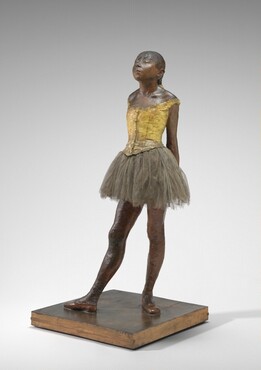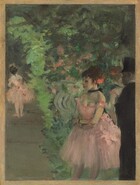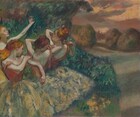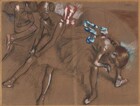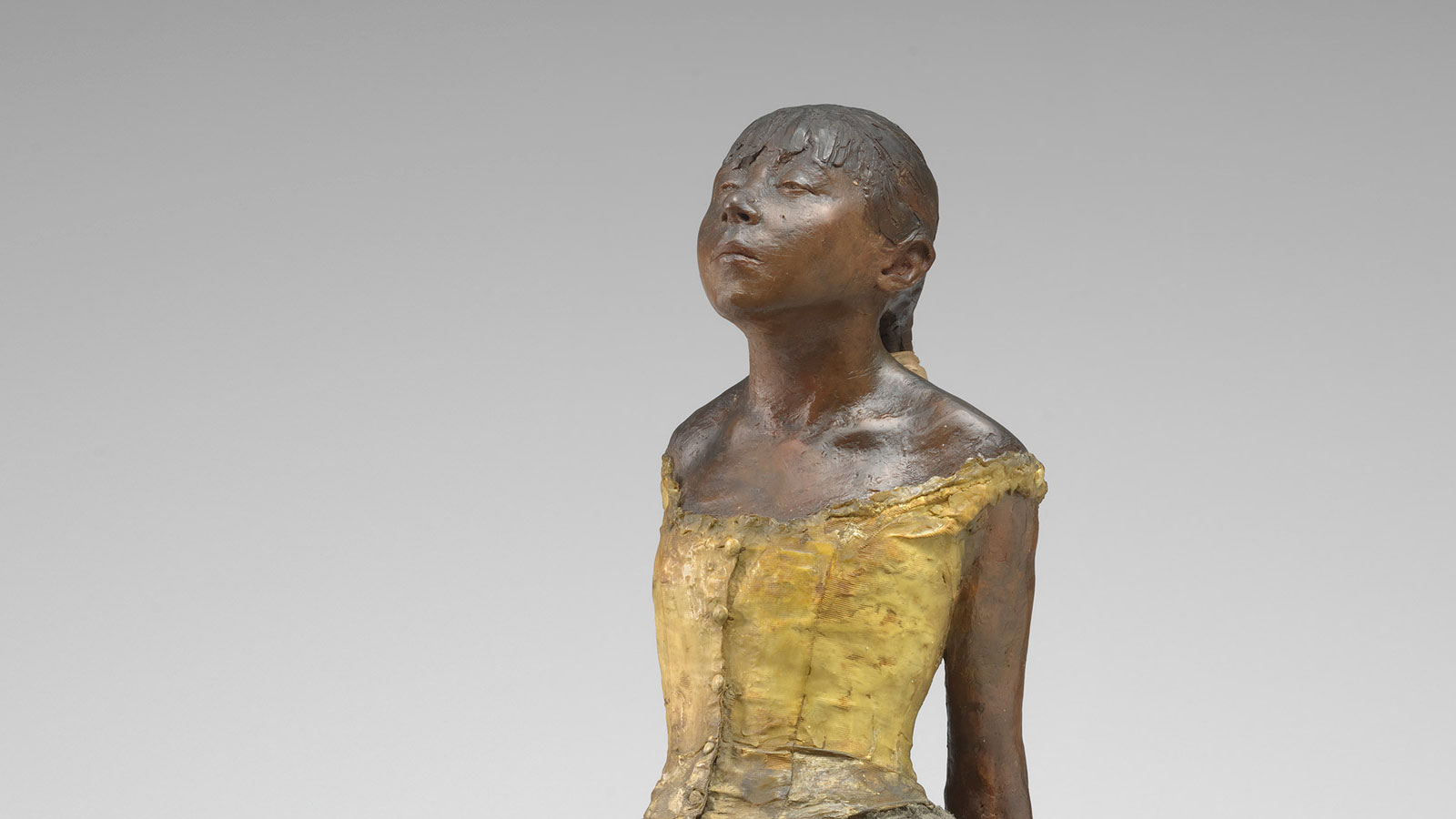


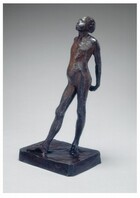
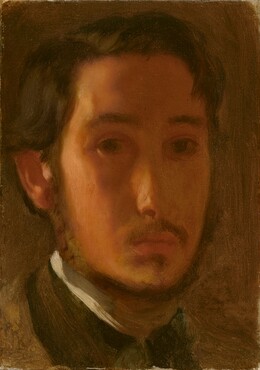
The eldest son of a Parisian banker, Edgar Degas reinforced his formal academic art training by copying old master paintings both in Italy, where he spent three years (1856–1859), and at the Louvre. Degas early on developed a rigorous drawing style and a respect for line that he would maintain throughout his career. His first independent works were portraits and history paintings but in the early 1860s he began to paint scenes from modern life. He started with the world of horse racing and by the end of the 1860s had also turned his attention to the theater and ballet.
Soon after a trip to New Orleans, where his uncle and two of his brothers worked in the cotton trade, in 1873, Degas banded together with other artists interested in organizing independent exhibitions without juries. He became a founding member of what soon would be known as the impressionists, participating in six impressionist exhibitions between 1874 and 1886.
Despite his long and fruitful association with the impressionists, Degas preferred to be called a realist. His focus on urban subjects, artificial light, and careful drawing distinguished him from other impressionists, such as Claude Monet, who worked outdoors, painting directly from their subjects. A steely observer of everyday scenes, Degas tirelessly analyzed positions, gestures, and movement.