
 Formed in 2009, the Archive Team (not to be confused with the archive.org Archive-It Team) is a rogue archivist collective dedicated to saving copies of rapidly dying or deleted websites for the sake of history and digital heritage. The group is 100% composed of volunteers and interested parties, and has expanded into a large amount of related projects for saving online and digital history.

Born in Paris to a wealthy family, Édouard Manet showed promise in drawing and caricature from an early age. After twice being denied admission to France’s prestigious Naval College, he enrolled in 1850 at the studio of academic artist Thomas Couture. While copying paintings at the Louvre, Manet became attracted to the bold brushwork of Spanish painter Diego Velázquez. He soon adopted a free manner of painting that opposed the polished surfaces revered by academic artists. Rather than gradually building up a composition with layers of blended pigments and translucent glazes, Manet selected and applied patches of color side by side, from the start, for their final effect.
About the Artist
Henri Fantin-Latour, Édouard Manet, 1867. Art Institute of Chicago.
Edouard Manet, The Old Musician, 1862, oil on canvas, Chester Dale Collection, 1963.10.162
Manet set out on his own artistic career in 1856. Soon after, his focus on modern subject matter—street scenes, bar life, and backhanded versions of famous art icons—coupled with his unconventional paint handling, regularly provoked critics’ wrath. Olympia, a painting of a naked courtesan who frankly engages the viewer in parody of the classic Venus, triggered an unparalleled scandal when it was exhibited at the 1865 Salon. The uproar made Manet the de facto leader of the avant-garde.
Related Resources
Artist Information
Online Tour
Impressionism
Teaching Resource
Picturing France, 1830–1900
Image Download
Download a digital image of this work
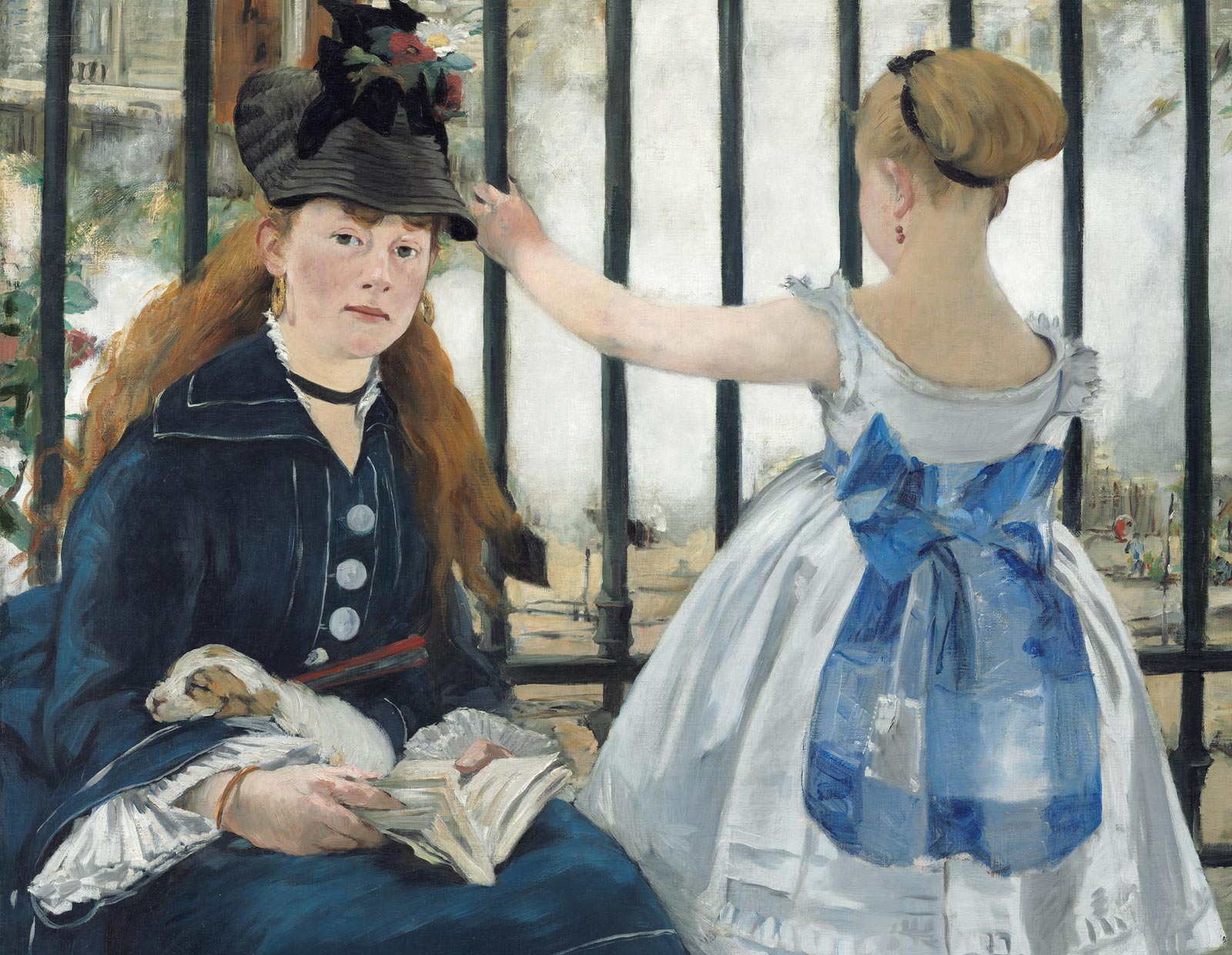
Edouard Manet, The Railway, 1873, oil on canvas, Gift of Horace Havemeyer in memory of his mother, Louisine W. Havemeyer, 1956.10.1
Manet’s bold style, contemporary subject matter, and determination to challenge entrenched academic models influenced younger artists who would come to be known as the impressionists. Manet, too, learned from them, lightening his palette and using even freer brushwork. But he did not share the impressionists’ spontaneity; the striking immediacy of Manet’s greatest works resulted from a deliberate process involving drawing, models, and painting in a studio. Still determined to make his mark in the official Salon, he declined the more radical option of exhibiting with the impressionists.
Manet continued producing enigmatic and inventive paintings about urban life until his death in 1883. While he had gained a reputation as an influential innovator, only posthumously would he be recognized as a father of modern art.
Related Works in the Collection
Edouard Manet, The Railway Restaurant, c. 1879, pen and brown ink on wove paper laid down, Collection of Mr. and Mrs. Paul Mellon, 2006.128.25
Edouard Manet, Masked Ball at the Opera, 1873, oil on canvas, Gift of Mrs. Horace Havemeyer in memory of her mother-in-law, Louisine W. Havemeyer, 1982.75.1
Jean Béraud, Paris, rue du Havre, c. 1882, oil on canvas, Ailsa Mellon Bruce Collection, 1970.17.2
Explore all Collection Highlights