The Wayback Machine - https://web.archive.org/web/20250404040708/https://www.nga.gov/research/casva/publications/center-report/center-42/programs.html
Skip to Main Content
a masked person is looking over a large book with prints, with other prints displayed on a counter surrounding the room

Programs

Center 42

During the academic year, the Center organizes scholarly meetings that range in size and duration from multiday gatherings and individual lectures with audiences to small roundtable discussions. All programs for the fall term were held virtually. In the spring term, we transitioned to in-person, livestreamed programs when possible.

Public Programs

October 1, 2021

Fragments and Frameworks: Illuminated Manuscripts and Illustrated Books in Digital Humanities

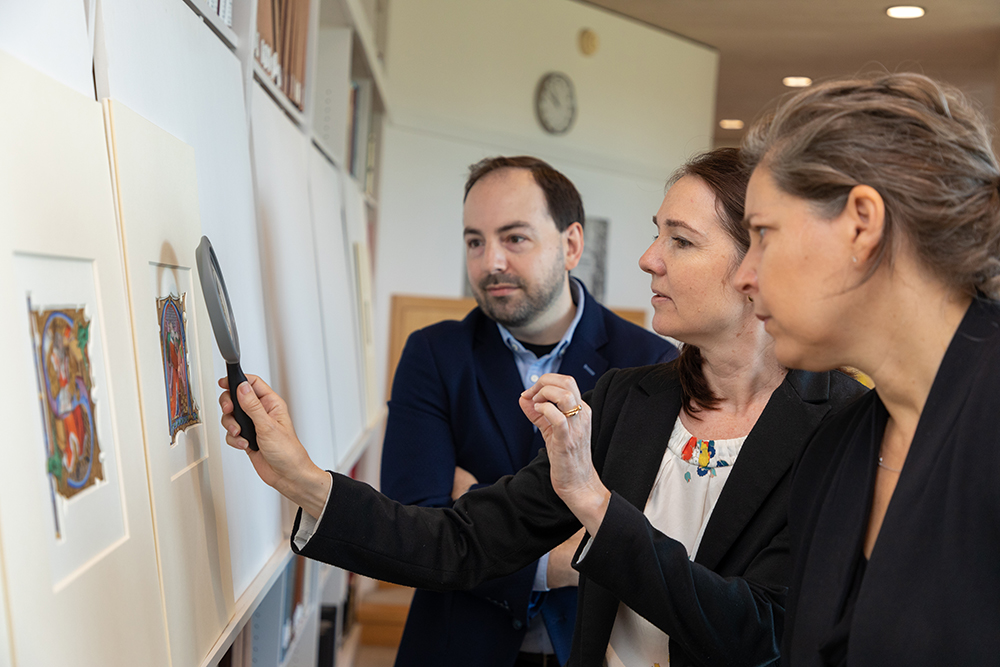
Matthew J. Westerby, Ginger Hammer, and Michelle Facini studying works from the Rosenwald Collection in the National Gallery’s Print Study Room, July 2021

Organized by Matthew J. Westerby, Robert H. Smith Postdoctoral Research Associate 
Virtual program

The study of art history has long dealt with fragments and processes of fragmentation. Illuminated manuscripts and illustrated books in particular may have their fragments and folia fugitiva—pieces of material—separated from a whole collection or corpus. Many thousands of drawings and miniatures are dispersed around the world, including those donated to the National Gallery of Art by Lessing J. Rosenwald.

The adoption of open-access online collections has enabled new avenues for study. Open digital frameworks promise to bring new data and new attention to these objects and to ask critical questions about their provenance and conservation.

This conference discussed fragments and frameworks, actual and conceptual, in art history, and addressed emerging questions in the digital humanities. What kinds of afterlives are incurred by processes of fragmentation and cutting? How does the concept of the frame or framework inform the study of illuminated manuscripts and illustrated books? How does the concept of (digital) remediation inform our approach to these works? 

Morning Session 
Steven Nelson, Center for Advanced Study in the Visual Arts 
Welcome

Matthew J. Westerby, Center for Advanced Study in the Visual Arts 
Moderator

Catherine Yvard, Victoria and Albert Museum 
Framing the Gaze: Some Thoughts on Illuminated Manuscripts and Cuttings

Cristina Dondi, Lincoln College, University of Oxford, and Secretary of CERL 
Books as Fragments of Libraries—Illustrations as Fragments of Books: A Digital Illustrated Census of Dante’s Comedia (1481)

John K. Delaney and Michelle Facini, National Gallery of Art 
Collaborative Technical Study and a Machine Learning Future for Illuminated Manuscripts

Bryan Keene, Riverside City College 
Encompassing the Globe: Digital Scholarship and Virtual Reconstructions of Illuminated Manuscripts

Afternoon Session 
Peter M. Lukehart, Center for Advanced Study in the Visual Arts 
Welcome and introduction; moderator

Lisa Fagin Davis, Medieval Academy of America 
Medieval Fragments and Modern Fragmentology

LauraLee Brott, University of Wisconsin–Madison 
The Materiality of Medieval Maps in the Age of Digital Discovery

Heather Bamford, George Washington University 
Out of Practice, Uncertain Cultures

Matthew J. Westerby, Center for Advanced Study in the Visual Arts 
Frameworks for Fragments: The Digital Lives of Miniatures

November 5, 2021

Sydney J. Freedberg Lecture on Italian Art

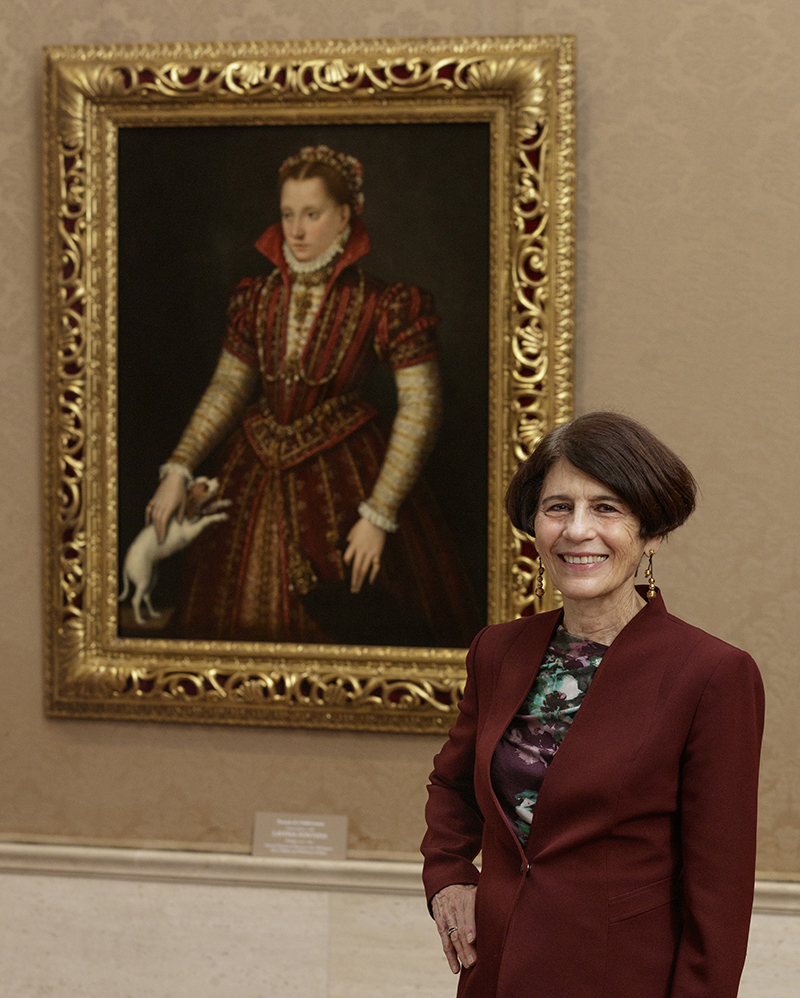
Babette Bohn with Lavinia Fontana’s Portrait of a Noblewoman (c. 1580) at the National Gallery, on temporary loan from the National Museum of Women in the Arts, November 2021

“More perfect and excellent than men”: The Women Artists of Bologna
Babette Bohn, Texas Christian University 
Virtual program

Early modern Bologna was exceptional for its many talented women artists. Thanks to a long-standing tradition of honoring accomplished women, several attentive artistic biographers, strong local interest in collecting women’s work, and permissive attitudes toward women studying with male artists who were not family members, Bologna was home to more women artists than any other city in early modern Italy. Bolognese women artists were unusual not only for their large numbers but also for their varied specializations and frequent public success. They painted altarpieces, nudes, mythologies, allegories, portraits, and self-portraits, creating sculptures, drawings, prints, embroidery, and paintings. This lecture challenged some common assumptions about women artists, suggesting productive approaches for future research. 

Watch Listen

December 3, 2021

Wyeth Lecture in American Art

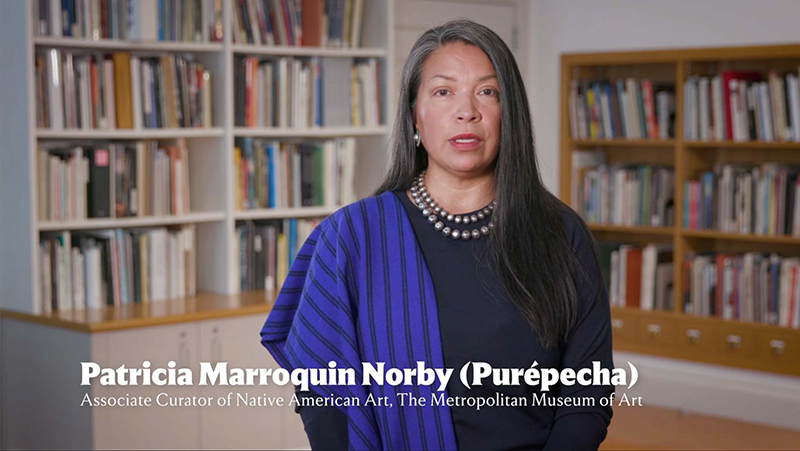
Video still from the Wyeth Lecture in American Art, released December 2021

Prioritizing Indigenous Communities and Voices: Curating in This Time
Patricia Marroquin Norby, The Metropolitan Museum of Art 
Virtual program

This lecture by Patricia Marroquin Norby (Purépecha) focused on her forthcoming book Water, Bones, and Bombs and her curatorial practices that affirm Indigenous representations. She shared her vision for and approaches to collecting, presenting, and interpreting Native American art at the Metropolitan Museum of Art and beyond. In September 2020, Dr. Norby made history with her appointment at the Met, becoming the first full-time curator of Native American art in the museum’s 150-year history. Since then Dr. Norby has broken institutional barriers by engaging bold, refreshing, community-centered approaches that foreground Indigenous voices and experiences within the Met’s collections, exhibitions, and programs. Dr. Norby previously served as senior executive and assistant director of the National Museum of the American Indian in New York and as director of the D’Arcy McNickle Center for American Indian and Indigenous Studies at the Newberry in Chicago.

Watch Listen

March 4–5, 2022

Middle Atlantic Symposium in the History of Art

52nd Annual Sessions
Cosponsored with the Department of Art History and Archaeology, University of Maryland
University of Maryland / West Building Lecture Hall and livestreamed

Friday, March 4
Evening Session
Mabel O. Wilson, Columbia University 
George Levitine Lecture in Art History 
Spaces in the Shadows: The Archives and Architectures in the Work of Carrie Mae Weems

Saturday, March 5
Morning Session
Steven Nelson, Center for Advanced Study in the Visual Arts 
Moderator

Joseph Kopta, Temple University 
Chromatic Networks: Materiality and Materialism of Middle Byzantine Gospel Lectionaries (c. 850–1204 CE) 
Introduction: Elizabeth S. Bolman

Amanda Chen, University of Maryland 
Transition, Transformation, and the Threshold of the Domus M. Caesi Blandi [VII.1.40] in Pompeii 
Introduction: Maryl B. Gensheimer

Jamie Richardson Sandhu, Bryn Mawr College 
The Divine Liefhebber: A New Interpretation of Frans Francken the Younger’s Allegory of the Pictura Sacra (c. 1635) 
Introduction: Sylvia W. Houghteling

Carolyn Davis, George Washington University 
Literacy, Devotion, and Globalism: Enconchado Paintings of St. Anne in Colonial Mexico 
Introduction: Barbara von Barghahn

Afternoon Session
Tess Korobkin, University of Maryland  
Moderator

Rachel Ozerkevich, University of North Carolina 
Class and Leisure Along the Seine: Seurat’s Bathers at Asnières (1884) and Olympic Ideals 
Introduction: Tatiana C. String

Meg MacKenzie, American University 
The Darkroom as Weapon? Anti-Colonialism and Ethnography in Raoul Ubac’s Penthésilée Photomontages 
Introduction: Juliet Bellow

Marica Antonucci, Johns Hopkins University 
What’s in a Name? Mario Schifano, Sidney Janis, and the Politics of Style in Postwar Italy 
Introduction: Stephen J. Campbell

Eleanore Neumann, University of Virginia 
“Who would believe it?”: Maria Graham and the Gendered Representation of Slavery during the Independence of Brazil (1821–1824) 
Introduction: Douglas Fordham

March 13, 2022

Conversation and Book Signing with Mary Beard

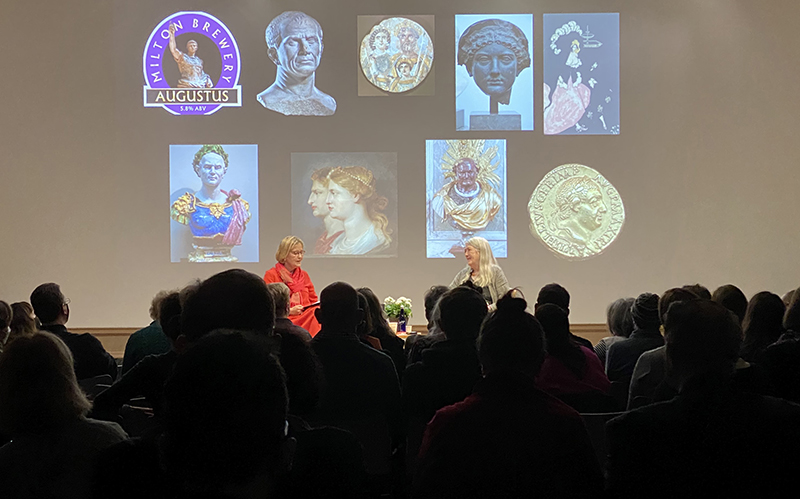
Kaywin Feldman and Mary Beard in conversation, March 2022

West Building Lecture Hall and livestreamed

A conversation between professor and award-winning author Mary Beard and National Gallery of Art director Kaywin Feldman, followed by a book signing of Beard’s newest publication, Twelve Caesars: Images of Power from the Ancient World to the Modern.

March 20–May 1, 2022

The 71st A. W. Mellon Lectures in the Fine Arts

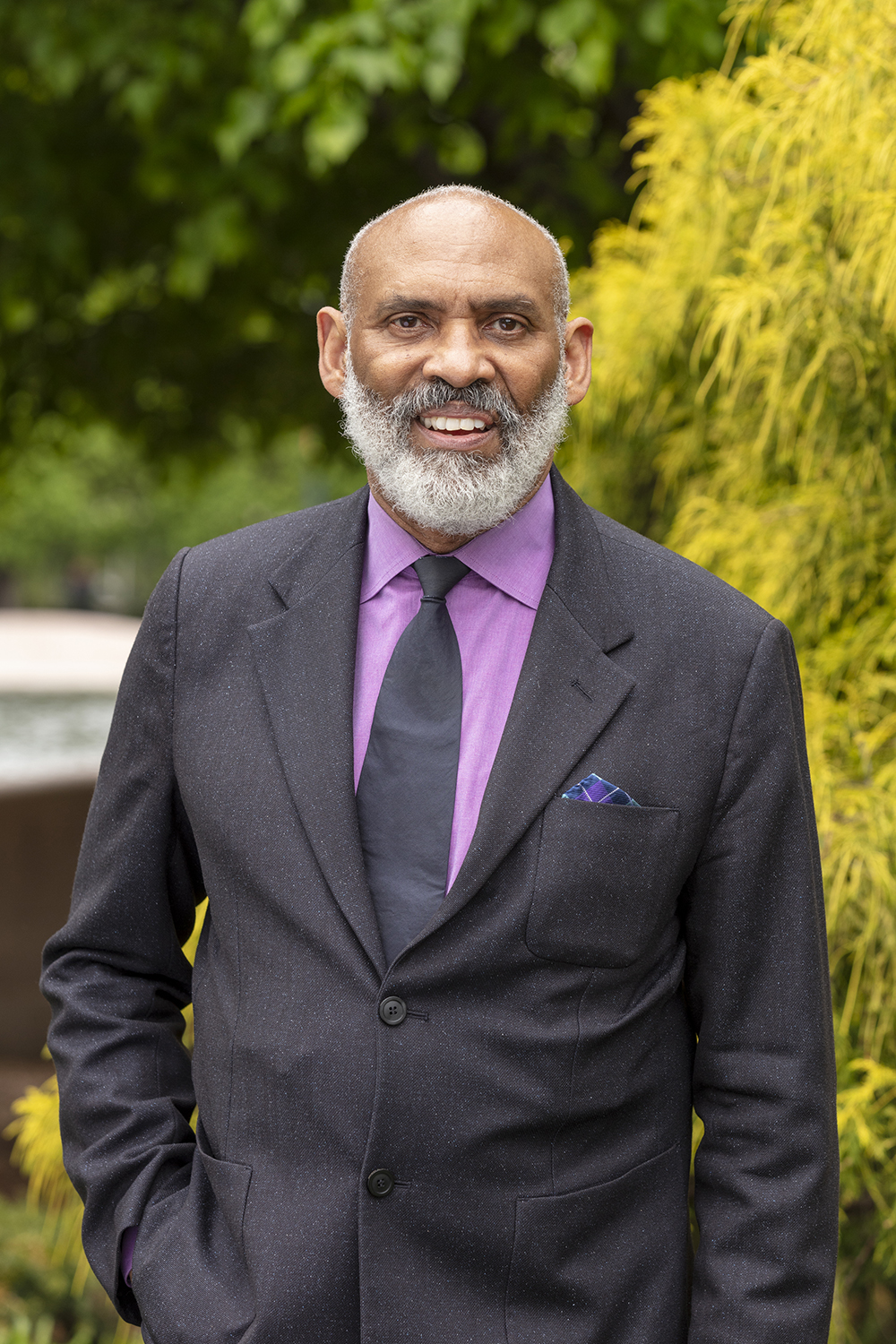
Richard J. Powell

Colorstruck! Painting, Pigment, Affect
Richard J. Powell, Duke University 
West Building Lecture Hall and livestreamed

Richard J. Powell explored the concept of “colorstruck,” a 20th-century term addressing prejudice against people with darker complexions, in the 71st annual A. W. Mellon Lectures in the Fine Arts. The six-part series examined how colors—chromatic interactions in paintings and the sociocultural dynamics of race—collide in unanticipated ways.

Color does more than capture the viewer’s attention; it assaults one’s equilibrium, physically and socially. Using blue, green, yellow, orange, black, red, brown, and their combinations as points of departure, Powell traced the visual and conceptual pathways of particular palettes. Through close looking at works by Nina Chanel Abney, Jean-Michel Basquiat, Sam Gilliam, Jacob Lawrence, Raymond Saunders, and Alma Thomas—painters for whom hue and pigmentation carry diverse associations—Powell’s lectures revealed how color can strike a chord for freedom and reclamation in art and life.

The lectures were held on the dates below. Videos of the lectures were posted online in summer 2022.

March 20: Colorstruck! Painting, Pigment, Affect 
March 27: Jacob Lawrence’s Viridian 
April 3: Yellow, Orange Glow 
April 10: Red Combustion, Blue Alchemy 
April 24: Chromatic Dispatches: Télémaque, Basquiat 
May 1: The Bronze Thrill 

Watch

April 8, 2022

James A. Porter Colloquium on African American Art and Art of the African Diaspora

Fearless Endeavors: Daring Art History Methodologies and Art Practices 
Cosponsored with Howard University 
Virtual program

The 32nd annual James A. Porter Colloquium considered how fearlessness has advanced African American art and art of the African Diaspora.

Program
Sarah Lewis, Harvard University  
Opening Lecture 
Black Art and the Groundwork of Art History

Alvia Wardlaw, University Museum at Texas Southern University 
Curatorial Conversation

Huey Copeland, Center for Advanced Study in the Visual Arts 
James A. Porter Distinguished Lecture 
Conditions Reporting

Bisa Butler, Chicago 
Floyd Coleman Lecture 
Bisa Butler: Quilts and Inheritance

Betye Saar, Lillian Thomas Burwell, and Stephanie Sparling Williams 
Award Recognition

May 12, 2022

Edmond J. Safra Lecture

Art Writing and Opacity 
Aruna D’Souza, Edmond J. Safra Visiting Professor, spring 2022 
West Building Lecture Hall and livestreamed

In this lecture, Aruna D’Souza considered fundamental questions about the power dynamics inherent in writing about art. How might art historians and critics write about the art of others—of artists who are dealing with histories of and creating work for racialized, minoritized, or colonized communities of which one might not be a part—without resorting to extractive models of writing? How might one pursue curiosities without treading on what poet and theorist Édouard Glissant calls “the right to opacity” of our objects of study? D’Souza’s talk drew on lessons from artists and writers who challenge us to sit with silence, secrecy, and invisibility.

Programs By Invitation

June 1–4 and 7, 2021

A. W. Mellon Predoctoral Seminar

Reading Atmospherically: Black Studies, Critical Theory, and Their Legacies 
Organized by Ellen Tani, A. W. Mellon Postdoctoral Fellow, 2020–2022 
Virtual program

Each year, a Center postdoctoral fellow designs and directs an intensive weeklong seminar for the predoctoral fellows in residence.

This seminar offered both an introduction to and engagement with texts from Black Studies and explores how its generative legacy—long considered extrinsic to the work of art history (with the exception of African American art)—offers creative reframings for our work as scholars, teachers, and institution builders. Recent texts in Black Studies reconsider fundamental ideas, from physics and atmospheric conditions to coasts and sounds. These models of speculative and provisional inquiry explore furtive and radical pathways through the structuring logics of Western enlightenment and modernist thought. How can we expand the tools at our disposal to resolve some fundamental contradictions of the field, such as its reckoning with its colonial past and the broader Enlightenment project through which it arose? And can we interrogate the foundational grammar of art-historical study at the same time?

Participants 
Thadeus Dowad, Paul Mellon Fellow, 2018–2021 
Susan Eberhard, Andrew W. Mellon Fellow, 2019–2021 
Ziliang Liu, Ittleson Fellow, 2019–2021 
Andrew Sears, David E. Finley Fellow, 2018–2021 
Kimia Shahi, Wyeth Fellow, 2019–2021 
Johanna Sluiter, Twenty-Four-Month Chester Dale Fellow, 2019–2021 
Teresa Soley, Samuel H. Kress Fellow, 2019–2021

November 8, 2021

Sydney J. Freedberg Lecture on Italian Art Incontro

Investigating the Women Artists of Early Modern Italy: Methods, Provocations, and Challenges
Babette Bohn, Texas Christian University 
Virtual program

This discussion explored some of the methods and challenges pertinent to the study of early modern women artists in Italy. One example is archival research, which is essential and often fruitful, but can also be frustrating and incomplete given the discriminatory selectivity of the historical record. Investigations of patronage, critical language, social and economic circumstances, criteria for determining authorship, and the pervasiveness of lost works all create challenges for scholars. Can some combination of useful strategies mitigate these issues? 

November 19, 2021, and May 19–20, 2022

Art Academies: Europe and the Americas, c. 1600–1900

Organized by Peter M. Lukehart, Associate Dean, and Ulrich Pfisterer (Zentralinstitut für Kunstgeschichte, Munich), with Oscar E. Vázquez (University of Illinois at Urbana-Champaign) 
November 19: Virtual program 
May 19–20: Munich

These seminars brought together specialists of the academies and schools of art of the 17th through 19th centuries in both Europe and the Americas. In recent decades, art-historical scholarship on artists’ training has focused on the intersectionality, global entanglements, and sociocultural significance and political contexts of the production, distribution, reception, display, and performance of objects, images, and their histories. Yet, research that takes a comparative analysis of the definitions, functions, and differing contexts of institutions of arts training has been almost completely absent.

The Art Academies seminars aimed to make a significant contribution in this direction. Examining academies of art and arts organizations in both Europe and the Americas, the program sought to evaluate the ideological and material differences among and within academies. It did so in order to highlight the specific academic dissonances that counter the chorus of publications that either drown out the individual contributions of local institutions or, contrarily, remain silent about the possibility of other—often outside—models. The differences afford us a more nuanced and complex understanding concerning academies that were in fact adapted and shaped as much by local concerns and needs as by international trends across time and oceans.

Participants 
Buket Altinoba, Institut für Kunstgeschichte, Ludwig-Maximilians-Universität München 
María Isabel Baldasarre, Ministerio de Cultura de la Nación, Buenos Aires 
Émilie Beck Saiello, Centre Norbert Elias, EHESS/CNRS/Avignon Université/Aix-Marseille Université 
Pablo Berríos González, Santiago, Chile 
David Brigham, Historical Society of Pennsylvania 
Carolina Brook, Rome, Italy 
Paul Duro, University of Rochester 
Ray Hernández-Durán, University of New Mexico 
Jongwoo Jeremy Kim, Carnegie Mellon University 
Peter M. Lukehart, Center for Advanced Study in the Visual Arts 
Esperanza Navarrete Martínez, Real Academia de Bellas Artes de San Fernando, Madrid 
César Peña, Universidad de los Andes, Bogotá 
Trinidad Pérez Arias, Universidad Andina Simón Bolivar, Quito 
Ulrich Pfisterer, Zentralinstitut für Kunstgeschichte, Munich 
Christiane Salge, Technische Universität Darmstadt 
Vita Segreto, Accademia di Belle Arti di Roma 
Ursula Ströbele, Zentralinstitut für Kunstgeschichte, Munich 
Oscar E. Vázquez, University of Illinois at Urbana-Champaign 
Daryle Williams, University of California, Riverside

December 6, 2021

Wyeth Lecture in American Art Incontro

Curating Now: Understanding Indigenous Perspectives, Foregrounding Indigenous Voices
Patricia Marroquin Norby, The Metropolitan Museum of Art 
Virtual program

Patricia Marroquin Norby (Purépecha) discussed the lives and careers of Tewa artists Tonita Peña (San Ildefonso/Cochiti) and Helen Hardin (Santa Clara). She shared her curatorial practices that affirm Indigenous representations and voices at the Metropolitan Museum of Art and her vision for collecting, presenting, and interpreting Native American art. 

April 4, 2022

A. W. Mellon Lectures in the Fine Arts Incontro

Richard J. Powell, Duke University 
71st A. W. Mellon Lecturer in the Fine Arts 
Virtual program

A discussion of the 2022 A. W. Mellon Lectures in the Fine Arts, Colorstruck! Painting, Pigment, Affect

April 21–August 18, 2022

Book Proposal Development Program

Organized by Elise Ferone, Center Support Specialist, and Lauren Taylor, Postdoctoral Research Associate 
Virtual program

Held virtually, this program centered on securing a book contract and took the form of weekly seminars and biweekly workshopping sessions. Experienced academics and publishing professionals gave presentations and facilitated discussions concerning the conceptual and practical aspects of creating a book proposal based upon a completed dissertation. Workshopping sessions encouraged participants to generate drafts of their proposal, to share peer-to-peer feedback, and to build support networks. The initiative supported the professional development of early career alumni and also facilitated peer engagement across cohort years.

Moderator 
Steven Nelson, Center for Advanced Study in the Visual Arts

Speakers 
Huey Copeland, Center for Advanced Study in the Visual Arts 
Madhuri Desai, The Pennsylvania State University 
Eleanor Goodman, The Pennsylvania State University Press 
Byron C. Hamann, The Ohio State University 
Ken Wissoker, Duke University Press

Participants 
Ravinder S. Binning, Kunsthistorisches Institut in Florenz 
Rachel E. Boyd, Ashmolean Museum 
Alexander Brey, Wellesley College 
Alicia Caticha, Northwestern University 
Ashley Dimmig, The Walters Art Museum 
Valeria Federici, Center for Advanced Study in the Visual Arts 
Michele L. Frederick, North Carolina Museum of Art 
Nikki Georgopulos, National Gallery of Art 
Ximena A. Gómez, University of Massachusetts Amherst 
Eric R. Hupe, Lafayette College 
Annika Johnson, Joslyn Art Museum 
Samuel Luterbacher, Yale University 
James Pilgrim, Johns Hopkins University 
Miriam K. Said, Center for Advanced Study in the Visual Arts 
Michelle Smiley, Rutgers University 
Ellen Tani, Center for Advanced Study in the Visual Arts 
Lauren Taylor, Center for Advanced Study in the Visual Arts 
Matthew J. Westerby, Center for Advanced Study in the Visual Arts 
Fulvia Zaninelli, Center for Advanced Study in the Visual Arts

May 13, 2022

Edmond J. Safra Colloquy

The Anarchival Impulse 
Organized by Aruna D’Souza, Edmond J. Safra Visiting Professor, spring 2022, and Anthony Elms (Philadelphia)
In-person program

Participants 
Raven Chacon, Red Hook, NY 
Rhea L. Combs, National Portrait Gallery, Smithsonian Institution 
Lynne Cooke, National Gallery of Art 
Huey Copeland, Center for Advanced Study in the Visual Arts 
Marissa Del Toro, New Haven, CT 
Molly Donovan, National Gallery of Art 
Aruna D’Souza, Center for Advanced Study in the Visual Arts 
Anthony Elms, Philadelphia 
Kanitra Fletcher, National Gallery of Art 
Candice Hopkins, Red Hook, NY 
Paul B. Jaskot, Duke University 
Peter M. Lukehart, Center for Advanced Study in the Visual Arts 
Steven Nelson, Center for Advanced Study in the Visual Arts 
Jennifer Stager, Johns Hopkins University 
Lowery Stokes Sims, Center for Advanced Study in the Visual Arts 
Hilary Whitham Sánchez, Center for Advanced Study in the Visual Arts 
Kandis Williams, Studio Kandis Williams/Cassandra Press

May 25, 2022

Traveling Research Seminar on Afro-Latin American Art Study Day

In conjunction with the exhibition Afro-Atlantic Histories
In-person program

In conjunction with the National Gallery’s curatorial division, the Center hosted Harvard University’s Traveling Research Seminar on Afro-Latin American Art for a daylong visit centering on the exhibition Afro-Atlantic Histories. The study day featured a panel discussion with the National Gallery’s curatorial team.

Participants 
Kleber Amancio, Universidade Federal do Recôncavo da Bahia, Cruz das Almas 
Nohora Arrieta Fernández, Georgetown University 
Vivian Braga dos Santos, Institut national d’histoire de l’art, Paris 
Kency Cornejo, University of New Mexico 
Molly Donovan, National Gallery of Art 
Kanitra Fletcher, National Gallery of Art 
Tatiana Flores, Rutgers, The State University of New Jersey 
Cary Aileen García Yero, Harvard University 
María de Lourdes Ghidoli, Grupo de Estudios Afrolatinoamericanos, Universidad de Buenos Aires 
Andrew Hamilton, The Art Institute of Chicago 
Eva Lamborghini, Universidad de Buenos Aires 
Ada Elena Lescay González, Universidad de Oriente, Santiago de Cuba 
Tadeu Mourão dos Santos Lopes, Instituto Federal de São Paulo 
Steven Nelson, Center for Advanced Study in the Visual Arts 
Elena O’Neill, Universidad Católica del Uruguay, Montevideo 
E. Carmen Ramos, National Gallery of Art 
Juliana Ribeiro da Silva Bevilacqua, Queen’s University, Kingston 
Melanie White, Brown University

Discussion Groups

December 2021–May 2022

Digital Humanities

Coordinated by Matthew J. Westerby, Robert H. Smith Postdoctoral Research Associate; Lauren Taylor, Postdoctoral Research Associate; and Christopher J. Nygren, Samuel H. Kress Senior Fellow 
Virtual and in-person program

What have you done, or what would you like to do, adjacent to the digital humanities? What is digital art history and what are the current debates? This informal discussion group gathered monthly to discuss questions in this realm and to share digital projects and tools.

December 2021–May 2022

Labor and the Silence of the Archive

Coordinated by Christopher J. Nygren, Samuel H. Kress Senior Fellow, and Isabella Lores-Chavez, Samuel H. Kress Fellow 
In-person program

In their pursuit of understanding a work of art, art historians tend to focus on the activity of a single author. The historical record—both textual and material—is much quieter about the constellation of actors whose labor in myriad ways contributes to artistic creation. This reading group discussed and explored various strategies to compensate for silences surrounding labor in traditional archives. At monthly meetings anchored in one or two secondary sources, the group drew inspiration from existing models for narrativizing the experience of anonymous or lesser-known figures and proposed possible future approaches to this expanded view of artistic labor.

January 13 and March 17, 2022

Narrating Art History

Coordinated by Huey Copeland, Andrew W. Mellon Professor, and Lauren Taylor, Postdoctoral Research Associate 
Virtual program

This group was devoted to discussing the multiplicity of creative approaches through which one can narrate art history.

Fellows’ Presentations

Colloquia, presented by the senior members of the Center, and shoptalks, given by the postdoctoral fellows, predoctoral fellows, and guest scholars, occur throughout the academic year and are by invitation. Unless otherwise indicated, all talks were held virtually.

Colloquia CCCXXVI–CCCXXXIV

October 14, 2021
Lowery Stokes Sims, Kress-Beinecke Professor 
Painting the Black Body: Praxis and Theory, 2010–2020

November 4, 2021
Jeffrey Moser, Paul Mellon Senior Fellow 
The Empty Tomb: Moral Depth in a Medieval Chinese Cemetery

December 2, 2021
Kathleen James-Chakraborty, Ailsa Mellon Bruce Senior Fellow 
Expanding Agency: Women and Modern American Architecture and Design

January 6, 2022
Juliet Koss, Ailsa Mellon Bruce Senior Fellow 
Model Utopia

February 24, 2022
Fabio Barry, Samuel H. Kress Senior Fellow 
Why Oval Churches?

March 3, 2022
Christopher J. Nygren, Samuel H. Kress Senior Fellow 
Shards of the New World: Painting on Obsidian and the Ecologies of Early Modern Art*

March 17, 2022
Kaira M. Cabañas, William C. Seitz Senior Fellow 
Deviant Art Histories

March 24, 2022
Shira Brisman, Ailsa Mellon Bruce Senior Fellow 
Insidious Silver: German Goldsmiths and Their Craft, 1568–1610*

April 21, 2022
Huey Copeland, Andrew W. Mellon Professor, 2020–2022 
Alreadymade: Black Visual Thought, Duchamp’s Fountain, and the Ends of White Art History (circa 2020)*


* held in the West Building Lecture Hall and livestreamed

Shoptalks 252–260

October 21, 2021
Ellen Tani, A. W. Mellon Postdoctoral Fellow, 2020–2022 
Black Conceptual Practice in Contemporary Art 

November 1, 2021
Luke A. Fidler, Paul Mellon Fellow 
Coercive Form: Sculptural Politics and Medieval Subjects

November 15, 2021
Rachel Catherine Patt, David E. Finley Fellow 
Yearning through Gilt Glass: Pothos, Memory, and Materiality in the Ancient Mediterranean

December 9, 2021
Isabella Lores-Chavez, Samuel H. Kress Fellow 
To Touch and Turn: The Plaster Cast and the Draftsman’s (Time)line

January 24, 2022
Mohit Manohar, Andrew W. Mellon Fellow 
Delhi Reinterpreted: The Making of Daulatabad in the Early 14th Century

February 7, 2022
Christine Garnier, Wyeth Fellow 
Slender Maker’s Silverscapes: Mutable Currencies, Mobile Adornments

March 10, 2022
Catherine H. Popovici, Ittleson Fellow 
Stelae on the Edge: Landscape and Power in Seventh-Century Copán

April 7, 2022
Erhan Tamur, Twenty-Four-Month Chester Dale Fellow 
Site-Worlds: The Statues of Gudea Across Time and Space

April 14, 2022
Nisa Ari, Beinecke Postdoctoral Fellow, 2021–2023 
Wasteland, Promised Land, Homeland: Painting Flora Palaestina Before the Nakba

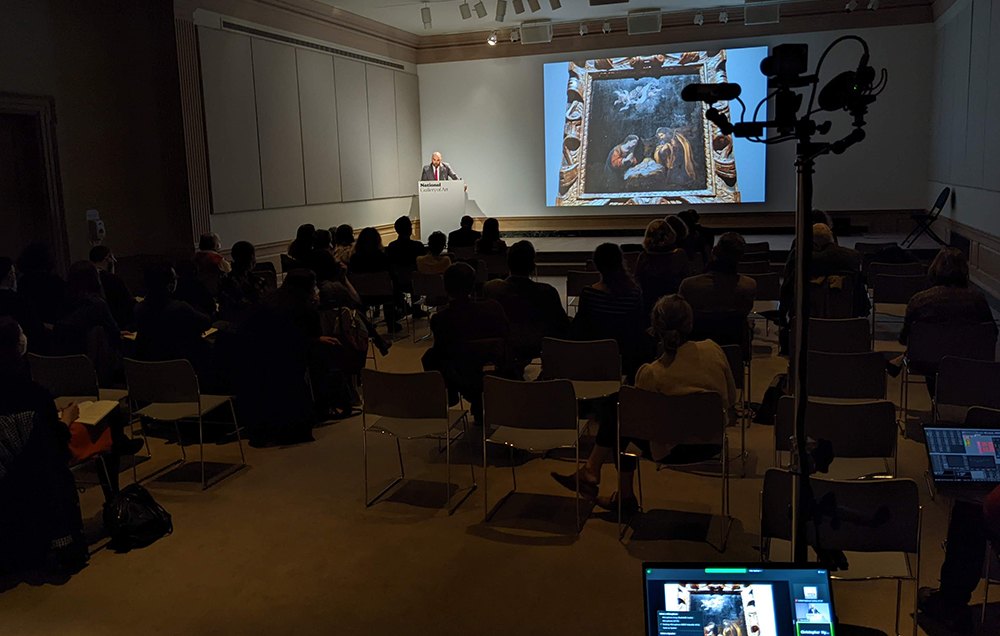
Christopher J. Nygren presents the Center’s first in-person colloquium since February 2020 on March 3, 2022