-
January 10, 2012
Kirk Varnedoe, Institute for Advanced Study. This six-part series examines abstract art over a period of fifty years, beginning with a crucial juncture in modern art in the mid-1950s, and builds a compelling argument for a history and evaluation of late twentieth-century art that challenges the distinctions between abstraction and representation, modernism and postmodernism, minimalism and pop. The accompanying publication, Pictures of Nothing: Abstract Art since Pollock , is available for purchase from the Gallery Shops. In this first lecture, originally delivered at the National Gallery of Art on March 30, 2003, the distinguished art historian Kirk Varnedoe begins with Jackson Pollock at a key moment in the emergence of a new form of abstract art in the mid-1950s. Building on Ernst Gombrich's Mellon Lectures of 1956, Varnedoe begins by asking: Can there be a philosophy of abstract art as compelling as Gombrich's argument for illusionism? What is abstract art good for? And finally, what do we get out of abstract art?
-
January 17, 2012
Kirk Varnedoe, Institute for Advanced Study. This six-part series examines abstract art over a period of fifty years, beginning with a crucial juncture in modern art in the mid-1950s, and builds a compelling argument for a history and evaluation of late twentieth-century art that challenges the distinctions between abstraction and representation, modernism and postmodernism, minimalism and pop. The accompanying publication, Pictures of Nothing: Abstract Art since Pollock , is available for purchase from the Gallery Shops. In this second lecture, originally delivered at the National Gallery of Art on April 6, 2003, the distinguished art historian Kirk Varnedoe discusses the reactions of artists such as Jackson Pollock and Jasper Johns to prewar traditions of constructivism, and the initiation of new movements that utilized similar forms but with very dissimilar premises. While raising the question of whether abstract art can have a fixed meaning, he argues that abstraction provides no respite from interpretation or retreat from the contingencies of art history.
-
January 24, 2012
Kirk Varnedoe, Institute for Advanced Study. This six-part series examines abstract art over a period of fifty years, beginning with a crucial juncture in modern art in the mid-1950s, and builds a compelling argument for a history and evaluation of late twentieth-century art that challenges the distinctions between abstraction and representation, modernism and postmodernism, minimalism and pop. The accompanying publication, Pictures of Nothing: Abstract Art since Pollock , is available for purchase from the Gallery Shops. In this third lecture, originally delivered at the National Gallery of Art on April 13, 2003, the distinguished art historian Kirk Varnedoe contrasts multiple forms of minimalism in the 1960s, as seen in the works of Donald Judd, Robert Morris, and James Turrell, and examines, among other things, the degree to which this art is quintessentially American.
-
January 31, 2012
Kirk Varnedoe, Institute for Advanced Study. This six-part series examines abstract art over a period of fifty years, beginning with a crucial juncture in modern art in the mid-1950s, and builds a compelling argument for a history and evaluation of late twentieth-century art that challenges the distinctions between abstraction and representation, modernism and postmodernism, minimalism and pop. The accompanying publication, Pictures of Nothing: Abstract Art since Pollock , is available for purchase from the Gallery Shops. In this fourth lecture, originally delivered at the National Gallery of Art on April 27, 2003, the distinguished art historian Kirk Varnedoe marks 1968 as a turning point in minimalism, when a new organicism emerged in the work of Richard Serra and Eva Hesse. A change in scale and in relationship to the body and to landscape is epitomized in works such as Walter De Maria's Lightning Field , Michael Heizer's Double Negative , and Robert Smithson's Spiral Jetty .
-
February 7, 2012
Kirk Varnedoe, Institute for Advanced Study. This six-part series examines abstract art over a period of fifty years, beginning with a crucial juncture in modern art in the mid-1950s, and builds a compelling argument for a history and evaluation of late twentieth-century art that challenges the distinctions between abstraction and representation, modernism and postmodernism, minimalism and pop. The accompanying publication, Pictures of Nothing: Abstract Art since Pollock , is available for purchase from the Gallery Shops. In this fifth lecture, originally delivered at the National Gallery of Art on May 4, 2003, the distinguished art historian Kirk Varnedoe explores the 1980s, when Roy Lichtenstein, Andy Warhol, Claus Oldenburg, and others confronted the ironic relationship between abstraction and the representation of man-made objects, thus producing a politicized critique of abstraction. Varnedoe concludes by looking at artists including Gerhard Richter and Cy Twombly, whose varied approaches shifted abstract art from its position as the ultimate modern art to one of many options.
-
February 14, 2012
Kirk Varnedoe, Institute for Advanced Study. This six-part series examines abstract art over a period of fifty years, beginning with a crucial juncture in modern art in the mid-1950s, and builds a compelling argument for a history and evaluation of late twentieth-century art that challenges the distinctions between abstraction and representation, modernism and postmodernism, minimalism and pop. The accompanying publication, Pictures of Nothing: Abstract Art since Pollock, is available for purchase from the Gallery Shops. In this sixth and final lecture of the series, originally delivered at the National Gallery of Art on May 11, 2003, the distinguished art historian Kirk Varnedoe returns to a question raised in lecture one: Can an argument be made for abstraction as a legitimate part of both our cognitive process and our nature as a modern liberal society? Varnedoe leads the listener through a tour of Richard Serra's Torqued Ellipses , making an impassioned case for abstraction as an art of subjectivity- an art dependent on experience, human invention, and constant debate.
-
October 1, 2013
Mary Beard, Cambridge University. This six-part lecture series examines the continuing engagement throughout history with images of Roman emperors and its impact on Western visual art and culture. In this first lecture, originally delivered at the National Gallery of Art on March 27, 2011, the esteemed classicist and professor Mary Beard introduces the prejudices, conventions, and disagreements that underlie the identification and reception of Roman imperial portraits beginning with Julius Caesar.
-
October 1, 2013
Mary Beard, Cambridge University This six-part lecture series examines the continuing engagement throughout history with images of Roman emperors and its impact on Western visual art and culture. In this second lecture, originally delivered at the National Gallery of Art on April 3, 2011, the esteemed classicist and professor Mary Beard traces the emergence of imperial portraits, their role in the iconography of Roman power, and their shifting interpretations and latent significances in the modern world.
-
October 1, 2013
Mary Beard, Cambridge University This six-part lecture series examines the continuing engagement throughout history with images of Roman emperors and its impact on Western visual art and culture. In this third lecture, originally delivered at the National Gallery of Art on April 10, 2011, the esteemed classicist and professor Mary Beard shows how portraits of emperors took part in the transmission of power, legitimizing in marble an authorized genealogy of descent.
-
October 1, 2013
Mary Beard, Cambridge University This six-part lecture series examines the continuing engagement throughout history with images of Roman emperors and its impact on Western visual art and culture. In this fourth lecture, originally delivered at the National Gallery of Art on April 17, 2011, the esteemed classicist and professor Mary Beard discusses the role of female members of the imperial court in terms of dynastic succession, the transmission of power, and their representation in antique and post-antique art.
-
October 1, 2013
Mary Beard, Cambridge University This six-part lecture series examines the continuing engagement throughout history with images of Roman emperors and its impact on Western visual art and culture. In this fifth lecture, originally delivered at the National Gallery of Art on May 1, 2011, the esteemed classicist and professor Mary Beard considers the fluid, dynamic, and productive category of emperor groups, which became a popular theme of Western art following the first printing of Suetonius’ Lives of the Caesars in 1470.
-
October 1, 2013
Mary Beard, Cambridge University This six-part lecture series examines the continuing engagement throughout history with images of Roman emperors and its impact on Western visual art and culture. In this sixth and final lecture of the series, originally delivered at the National Gallery of Art on May 8, 2011, the esteemed classicist and professor Mary Beard summarizes the complexity of the reception of images of Roman imperial life and power as they have been altered, combined, redefined, and proliferated in all media.
-
April 1, 2014
Anthony Grafton, Princeton University. In this six-part lecture series entitled Past Belief: Visions of Early Christianity in Renaissance and Reformation Europe , Anthony Grafton focuses on the efforts of artists and scholars to recreate the early history of Christianity in a period of crisis in the church from the 15th to the 17th century. In this first lecture, entitled “How Jesus Celebrated Passover: The Jewish Origins of Christianity,” originally delivered at the National Gallery of Art on March 30, 2014, Grafton explores how the pictorial form of the Last Supper, a central theme in art, was radically transformed after the beginning of the Reformation in 1517. He shows how writers with great archaeological and historical learning delved into Roman antiquities and Jewish texts from the time of the origins of Christianity in order to bring back the world in which the Last Supper actually took place.
-
April 8, 2014
Anthony Grafton, Princeton University. In this six-part lecture series entitled Past Belief: Visions of Early Christianity in Renaissance and Reformation Europe , Anthony Grafton focuses on the efforts of artists and scholars to recreate the early history of Christianity in a period of crisis in the church from the 15th to the 17th century. In this second lecture, entitled “Bearers of Memory and Makers of History: The Many Paths to Christian Antiquity,” originally delivered at the National Gallery of Art on April 6, 2014, Professor Grafton argues that the history of knowledge was for millennia a history of books, the production of which established new standards of study and argument and ultimately the great libraries of Europe. Knowledge about the early church took the form of immense books—the work of learned scholars rich in erudition and impassioned by their beliefs, whose scholarship was often deeply prejudiced but sometimes reached original, prescient, and unexpected conclusions.
-
April 6, 2014
Anthony Grafton, Princeton University. In this six-part lecture series entitled Past Belief: Visions of Early Christianity in Renaissance and Reformation Europe , Anthony Grafton focuses on the efforts of artists and scholars to recreate the early history of Christianity in a period of crisis in the church from the 15th to the 17th century. In this third lecture, entitled “Christian Origins and the Work of Time: Imagining the First Christians,” originally delivered at the National Gallery of Art on April 13, 2014, Professor Grafton extols the religious imagination of the humanists who plumbed the early sources of Christian and Jewish traditions in order to write histories of the early church, producing unprecedented and radical visions of Christian origins.
-
April 6, 2014
Anthony Grafton, Princeton University. In this six-part lecture series entitled Past Belief: Visions of Early Christianity in Renaissance and Reformation Europe , Anthony Grafton focuses on the efforts of artists and scholars to recreate the early history of Christianity in a period of crisis in the church from the 15th to the 17th century. In this fourth lecture, entitled “Relics and Ruins: Material Survivals and Early Modern Interpretations,” originally delivered at the National Gallery of Art on April 27, 2014, Professor Grafton reveals Catholic and Protestant sensibilities as extremes that touched when scholars of both denominations feared the loss of tangible evidence of early Christian practice and ritual threatened in the course of modernization and destroyed in the wake of religious wars. Even as critical attitudes arose regarding the authenticity of these material remains, the past was seen in a new light in which they were acknowledged as witnesses to the pious traditions of the early church rather than as sources of corruption and deception.
-
May 6, 2014
Anthony Grafton, Princeton University. In this six-part lecture series entitled Past Belief: Visions of Early Christianity in Renaissance and Reformation Europe , Anthony Grafton focuses on the efforts of artists and scholars to recreate the early history of Christianity in a period of crisis in the church from the 15th to the 17th century. In this fifth lecture, entitled “Martyrdom and Persecution: The Uses of Early Christian Suffering,” originally delivered at the National Gallery of Art on May 4, 2014, Professor Grafton shows that early Christian martyrs were seen as the core of the true church and thus were used in the Renaissance by Catholic and Protestant scholars alike to defend either the status quo or reform agendas. Visual and textual references to ancient and modern martyrs were tightly linked in this period. Ancient martyrdom resonated with both the devout and the radical at a time when the theater of violence created by the first ideological wars in Europe made martyrdom not a distant, but a living experience, melding past, present, and future.
-
May 13, 2014
Anthony Grafton, Princeton University. In this six-part lecture series entitled Past Belief: Visions of Early Christianity in Renaissance and Reformation Europe , Anthony Grafton focuses on the efforts of artists and scholars to recreate the early history of Christianity in a period of crisis in the church from the 15th to the 17th century. In this sixth lecture, entitled “Constantine and Conversion: The Roles of the First Christian Emperor,” originally delivered at the National Gallery of Art on May 11, 2014, Professor Grafton argues that in their retelling of the dramatic and exemplary life of Constantine, scholars and artists forged new forensic, historical, and multidisciplinary approaches. They used philological and antiquarian evidence to unpack a layered and incoherent body of evidence that exposed the apocryphal legends of what has been called an “inherited conglomerate.” Protestant and Catholic writers concurred in their assessment that Constantine’s reign marked a radical transformation of art and religion and was thus a historical moment of great consequence—yet one or two began to see Constantine in less dramatic terms, as the human, political figure that he was. The erudition and imagination of these scholars and artists in the early modern period produced sophisticated and acute views of the early church, from which we can still profit today.
-
March 17, 2015
Thomas Crow, Rosalie Solow Professor of Modern Art, Institute of Fine Arts, New York University. In this six-part lecture series entitled Restoration as Event and Idea: Art in Europe, 1814‒1820 , Art historian Thomas Crow will consider the period following the fall of Napoleon. During this time, artists throughout Europe were left uncertain and adrift, with old certainties and boundaries dissolved. How did they then set new courses for themselves? Professor Crow's lectures answer that question by offering both the wide view of art centers across the continent—Rome, Paris, London, Madrid, Brussels—and a close-up focus on individual actors— Francisco Goya (1746‒1828), Jacques-Louis David (1748‒1825), Antonio Canova (1757‒1822), Sir Thomas Lawrence (1769‒1830), Jean-Auguste-Dominique Ingres (1780‒1867), and Théodore Géricault (1791‒1824). Whether directly or indirectly, these artists were linked in a new international network with changed artistic priorities and new creative possibilities emerging from the wreckage of the old. In this first lecture, entitled “Moscow Burns / The Pope Comes Home, 1812‒1814: David, Gros, and Ingres Test Empire’s Facade,” originally delivered at the National Gallery of Art on March 15, 2015, Professor Crow describes how key works by David, Gros, and Ingres, fashioned during this tumultuous two-year period, convey the tensions and fissures engendered by the unsustainable character of Napoleon’s foundering empire.
-
March 24, 2015
Thomas Crow, Rosalie Solow Professor of Modern Art, Institute of Fine Arts, New York University. In this six-part lecture series entitled Restoration as Event and Idea: Art in Europe, 1814‒1820 , Art historian Thomas Crow will consider the period following the fall of Napoleon. During this time, artists throughout Europe were left uncertain and adrift, with old certainties and boundaries dissolved. How did they then set new courses for themselves? Professor Crow's lectures answer that question by offering both the wide view of art centers across the continent—Rome, Paris, London, Madrid, Brussels—and a close-up focus on individual actors— Francisco Goya (1746‒1828), Jacques-Louis David (1748‒1825), Antonio Canova (1757‒1822), Sir Thomas Lawrence (1769‒1830), Jean-Auguste-Dominique Ingres (1780‒1867), and Théodore Géricault (1791‒1824). Whether directly or indirectly, these artists were linked in a new international network with changed artistic priorities and new creative possibilities emerging from the wreckage of the old. In this second lecture, entitled “At the Service of Kings, Madrid and Paris, 1814: Aging Goya and Upstart Géricault Face Their Restorations,” originally delivered at the National Gallery of Art on March 22, 2015, Professor Crow examines how Goya and Géricault were similarly moved to transform artistic antecedents, dislodging even the primacy of the human subject as an adequate vehicle for expressing the violent uncertainties of their moment in history.
-
March 31, 2015
Thomas Crow, Rosalie Solow Professor of Modern Art, Institute of Fine Arts, New York University. In this six-part lecture series entitled Restoration as Event and Idea: Art in Europe, 1814‒1820 , Art historian Thomas Crow will consider the period following the fall of Napoleon. During this time, artists throughout Europe were left uncertain and adrift, with old certainties and boundaries dissolved. How did they then set new courses for themselves? Professor Crow's lectures answer that question by offering both the wide view of art centers across the continent—Rome, Paris, London, Madrid, Brussels—and a close-up focus on individual actors— Francisco Goya (1746‒1828), Jacques-Louis David (1748‒1825), Antonio Canova (1757‒1822), Sir Thomas Lawrence (1769‒1830), Jean-Auguste-Dominique Ingres (1780‒1867), and Théodore Géricault (1791‒1824). Whether directly or indirectly, these artists were linked in a new international network with changed artistic priorities and new creative possibilities emerging from the wreckage of the old. In this third lecture, entitled “Cut Loose, 1815–1817: Napoleon Returns, David Crosses Borders, and Géricault Wanders Outcast Rome,” originally delivered at the National Gallery of Art on March 29, 2015, Professor Crow examines the displaced and wandering existences of David and Géricault, both in geographical and psychological exile, during which each was forced to reexamine and reconfigure the fundamentals of his artistic life.
-
April 14, 2015
Thomas Crow, Rosalie Solow Professor of Modern Art, Institute of Fine Arts, New York University. In this six-part lecture series entitled Restoration as Event and Idea: Art in Europe, 1814‒1820 , Art historian Thomas Crow will consider the period following the fall of Napoleon. During this time, artists throughout Europe were left uncertain and adrift, with old certainties and boundaries dissolved. How did they then set new courses for themselves? Professor Crow's lectures answer that question by offering both the wide view of art centers across the continent—Rome, Paris, London, Madrid, Brussels—and a close-up focus on individual actors— Francisco Goya (1746‒1828), Jacques-Louis David (1748‒1825), Antonio Canova (1757‒1822), Sir Thomas Lawrence (1769‒1830), Jean-Auguste-Dominique Ingres (1780‒1867), and Théodore Géricault (1791‒1824). Whether directly or indirectly, these artists were linked in a new international network with changed artistic priorities and new creative possibilities emerging from the wreckage of the old. In this fourth lecture, entitled “The Religion of Ancient Art from London to Paris to Rome, 1815–1819: Canova and Lawrence Replenish Papal Splendor,” originally delivered at the National Gallery of Art on April 12, 2015, Professor Crow shows how Rome, where both Italian and English artists served as agents in the repatriation of ancient art, became an international nexus in post-Napoleonic European culture. The difficulties of this endeavor, captured by Lawrence in his portrait of the reigning pope, came to symbolize the larger conflicts underlying dynastic restoration across Europe.
-
April 21, 2015
Thomas Crow, Rosalie Solow Professor of Modern Art, Institute of Fine Arts, New York University. In this six-part lecture series entitled Restoration as Event and Idea: Art in Europe, 1814‒1820 , Art historian Thomas Crow will consider the period following the fall of Napoleon. During this time, artists throughout Europe were left uncertain and adrift, with old certainties and boundaries dissolved. How did they then set new courses for themselves? Professor Crow's lectures answer that question by offering both the wide view of art centers across the continent—Rome, Paris, London, Madrid, Brussels—and a close-up focus on individual actors— Francisco Goya (1746‒1828), Jacques-Louis David (1748‒1825), Antonio Canova (1757‒1822), Sir Thomas Lawrence (1769‒1830), Jean-Auguste-Dominique Ingres (1780‒1867), and Théodore Géricault (1791‒1824). Whether directly or indirectly, these artists were linked in a new international network with changed artistic priorities and new creative possibilities emerging from the wreckage of the old. In this fifth lecture, entitled “The Laboratory of Brussels, 1816–1819: The Apprentice Navez and the Master David Redraw the Language of Art,” originally delivered at the National Gallery of Art on April 19, 2015, Professor Crow demonstrates how the exiled David seized the medium of drawing to foster new ways of selecting and reorganizing fragments of a discarded past.
-
April 28, 2015
Thomas Crow, Rosalie Solow Professor of Modern Art, Institute of Fine Arts, New York University. In this six-part lecture series entitled Restoration as Event and Idea: Art in Europe, 1814‒1820 , Art historian Thomas Crow will consider the period following the fall of Napoleon. During this time, artists throughout Europe were left uncertain and adrift, with old certainties and boundaries dissolved. How did they then set new courses for themselves? Professor Crow's lectures answer that question by offering both the wide view of art centers across the continent—Rome, Paris, London, Madrid, Brussels—and a close-up focus on individual actors— Francisco Goya (1746‒1828), Jacques-Louis David (1748‒1825), Antonio Canova (1757‒1822), Sir Thomas Lawrence (1769‒1830), Jean-Auguste-Dominique Ingres (1780‒1867), and Théodore Géricault (1791‒1824). Whether directly or indirectly, these artists were linked in a new international network with changed artistic priorities and new creative possibilities emerging from the wreckage of the old. In this sixth lecture, entitled “Redemption in Rome and Paris, 1818–1820: Ingres Revives the Chivalric while Géricault Recovers the Dispossessed,” originally delivered at the National Gallery of Art on April 26, 2015, Professor Crow extols Ingres’s and Géricault’s achievement in reconciling the immensity of inherited pain and loss in post-Napoleonic France with the established discipline of painting on monumental canvas. Their efforts transformed for a generation what a painting could be and could do.
-
April 5, 2016
Vidya Dehejia, Barbara Stoler Miller Professor of Indian Art, Columbia University. In this six-part lecture series entitled The Thief Who Stole My Heart: The Material Life of Chola Bronzes from South India, c. 855–1280 , art historian Vidya Dehejia discusses the work of artists of Chola India who created exceptional bronzes of the god Shiva, invoked as “Thief Who Stole My Heart.” Graceful, luminous sculptures of high copper content portrayed the deities as sensuous figures of sacred import. Every bronze is a portable image, carried through temple and town to participate in celebrations that combined the sacred with the joyous atmosphere of carnival. In these lectures, Dehejia discusses the images as tangible objects that interact in a concrete way with human activities and socioeconomic practices. She asks questions of this body of material that have never been asked before, concerning the source of wealth that enabled the creation of bronzes, the origin of copper not available locally, the role of women patrons, the strategic position of the Chola empire at the center of a flourishing ocean trade route between Aden and China, and the manner in which the Cholas covered the walls of their temples with thousands of inscriptions, converting them into public records offices. These sensuous portrayals of the divine gain their full meaning with critical study of information captured through a variety of lenses. The first lecture, held on April 3, 2016, entitled " Gods on Parade: Sacred Forms of Copper," focuses on the extraordinary concept of the deity as an active participant in a range of temple festivities, celebrating a wedding anniversary or enjoying the fresh breeze at the beach. It examines the introduction of copper to produce these many bronzes, whose method of creation allows no replicas; each Chola bronze is a singular, unique image, solid and weighty.
-
April 12, 2016
In this six-part lecture series entitled The Thief Who Stole My Heart: The Material Life of Chola Bronzes from South India, c. 855–1280 , art historian Vidya Dehejia discusses the work of artists of Chola India who created exceptional bronzes of the god Shiva, invoked as “Thief Who Stole My Heart.” Graceful, luminous sculptures of high copper content portrayed the deities as sensuous figures of sacred import. Every bronze is a portable image, carried through temple and town to participate in celebrations that combined the sacred with the joyous atmosphere of carnival. In these lectures, Dehejia discusses the images as tangible objects that interact in a concrete way with human activities and socioeconomic practices. She asks questions of this body of material that have never been asked before, concerning the source of wealth that enabled the creation of bronzes, the origin of copper not available locally, the role of women patrons, the strategic position of the Chola empire at the center of a flourishing ocean trade route between Aden and China, and the manner in which the Cholas covered the walls of their temples with thousands of inscriptions, converting them into public records offices. These sensuous portrayals of the divine gain their full meaning with critical study of information captured through a variety of lenses. The second lecture, held on April 10, 2016, entitled "Shiva as 'Victor of Three Forts': Battling for Empire, 855 – 955," considers the first bronzes, created in the mid-ninth century at a time when the early Chola kings were still struggling to establish their dominion in south India. The lecture discusses the most favored form given to the god Shiva during these politically unstable times: his manifestation as Victor of Three Forts. It also reviews the extraordinary manner in which patrons and donors placed inscriptions on every available space on temple walls, base moldings, and even grille windows.
-
April 19, 2016
Vidya Dehejia, Barbara Stoler Miller Professor of Indian Art, Columbia University. In this six-part lecture series entitled The Thief Who Stole My Heart: The Material Life of Chola Bronzes from South India, c. 855–1280 , art historian Vidya Dehejia discusses the work of artists of Chola India who created exceptional bronzes of the god Shiva, invoked as “Thief Who Stole My Heart.” Graceful, luminous sculptures of high copper content portrayed the deities as sensuous figures of sacred import. Every bronze is a portable image, carried through temple and town to participate in celebrations that combined the sacred with the joyous atmosphere of carnival. In these lectures, Dehejia discusses the images as tangible objects that interact in a concrete way with human activities and socioeconomic practices. She asks questions of this body of material that have never been asked before, concerning the source of wealth that enabled the creation of bronzes, the origin of copper not available locally, the role of women patrons, the strategic position of the Chola empire at the center of a flourishing ocean trade route between Aden and China, and the manner in which the Cholas covered the walls of their temples with thousands of inscriptions, converting them into public records offices. These sensuous portrayals of the divine gain their full meaning with critical study of information captured through a variety of lenses. In this third lecture, entitled "Portrait of a Queen: Patronage of Dancing Shiva, c. 941–1002," originally delivered at the National Gallery of Art on April 17, 2016, Professor Dehejia explores the patronage of the 10th-century queen Sembiyan Mahadevi, whose bronze workshop created stunning images. It asks how she achieved the status of “Ruby of the Chola Dynasty” in a male-dominated society and what led her to introduce a special image of Dancing Shiva that to this day is the quintessential Tamil icon.
-
April 26, 2016
Vidya Dehejia, Barbara Stoler Miller Professor of Indian Art, Columbia University. In this six-part lecture series entitled The Thief Who Stole My Heart: The Material Life of Chola Bronzes from South India, c. 855–1280 , art historian Vidya Dehejia discusses the work of artists of Chola India who created exceptional bronzes of the god Shiva, invoked as “Thief Who Stole My Heart.” Graceful, luminous sculptures of high copper content portrayed the deities as sensuous figures of sacred import. Every bronze is a portable image, carried through temple and town to participate in celebrations that combined the sacred with the joyous atmosphere of carnival. In these lectures, Dehejia discusses the images as tangible objects that interact in a concrete way with human activities and socioeconomic practices. She asks questions of this body of material that have never been asked before, concerning the source of wealth that enabled the creation of bronzes, the origin of copper not available locally, the role of women patrons, the strategic position of the Chola empire at the center of a flourishing ocean trade route between Aden and China, and the manner in which the Cholas covered the walls of their temples with thousands of inscriptions, converting them into public records offices. These sensuous portrayals of the divine gain their full meaning with critical study of information captured through a variety of lenses. In this fourth lecture, entitled "An Eleventh-Century Master Sculptor: Ten Thousand Pearls Adorn a Bronze," originally delivered at the National Gallery of Art on April 24, 2016, Professor Dehejia describes how a master sculptor of the early 11th century worked in wax to create spectacular bronzes for a temple at Tiruvenkadu, along the Bay of Bengal, and highlights the fact that royalty had no hand in these commissions. Drawing on the many epigraphs inscribed on Emperor Rajaraja’s great temple at Thanjavur, it examines the rich jewelry created entirely to adorn the bronze images and questions whether the Cholas’ obsession with pearls motivated them to annex Sri Lanka.
-
May 3, 2016
Vidya Dehejia, Barbara Stoler Miller Professor of Indian Art, Columbia University. In this six-part lecture series entitled The Thief Who Stole My Heart: The Material Life of Chola Bronzes from South India, c. 855–1280 , art historian Vidya Dehejia discusses the work of artists of Chola India who created exceptional bronzes of the god Shiva, invoked as “Thief Who Stole My Heart.” Graceful, luminous sculptures of high copper content portrayed the deities as sensuous figures of sacred import. Every bronze is a portable image, carried through temple and town to participate in celebrations that combined the sacred with the joyous atmosphere of carnival. In these lectures, Dehejia discusses the images as tangible objects that interact in a concrete way with human activities and socioeconomic practices. She asks questions of this body of material that have never been asked before, concerning the source of wealth that enabled the creation of bronzes, the origin of copper not available locally, the role of women patrons, the strategic position of the Chola empire at the center of a flourishing ocean trade route between Aden and China, and the manner in which the Cholas covered the walls of their temples with thousands of inscriptions, converting them into public records offices. These sensuous portrayals of the divine gain their full meaning with critical study of information captured through a variety of lenses. In this fifth lecture, entitled "Chola Obsession with Sri Lanka and the Silk Route of the Sea in the Eleventh and Twelfth Centuries," originally delivered at the National Gallery of Art on May 1, 2016, Professor Dehejia examines the bronze images of deities created in Buddhist Sri Lanka after it became a province of the Chola empire. Artists there, accustomed to creating relatively sedate forms of the Buddha, were baffled by a Dancing Lord whose very essence was movement. The lecture also reviews the Chola expeditions to southeast Asia in the context of the lucrative trade route between Aden and China.
-
May 8, 2016
Vidya Dehejia, Barbara Stoler Miller Professor of Indian Art, Columbia University. In this six-part lecture series entitled The Thief Who Stole My Heart: The Material Life of Chola Bronzes from South India, c. 855–1280, art historian Vidya Dehejia discusses the work of artists of Chola India who created exceptional bronzes of the god Shiva, invoked as “Thief Who Stole My Heart.” Graceful, luminous sculptures of high copper content portrayed the deities as sensuous figures of sacred import. Every bronze is a portable image, carried through temple and town to participate in celebrations that combined the sacred with the joyous atmosphere of carnival. In these lectures, Dehejia discusses the images as tangible objects that interact in a concrete way with human activities and socioeconomic practices. She asks questions of this body of material that have never been asked before, concerning the source of wealth that enabled the creation of bronzes, the origin of copper not available locally, the role of women patrons, the strategic position of the Chola empire at the center of a flourishing ocean trade route between Aden and China, and the manner in which the Cholas covered the walls of their temples with thousands of inscriptions, converting them into public records offices. These sensuous portrayals of the divine gain their full meaning with critical study of information captured through a variety of lenses. In this sixth lecture, entitled "Worship in Uncertain Times: The Secret Burial of Bronzes in 1310," originally delivered at the National Gallery of Art on May 8, 2016, Professor Dehejia looks at the dramatic secret burial of bronzes in temple after temple in 1310, an attempt to safeguard them from armies of the Delhi sultanate that marched south to seize the fabled jewels of the Chola temples. These buried bronzes emerged in the 20th century when unsuspecting laborers began temple expansion projects. The lecture concludes with a look at today’s art market and the transformation of beloved sacred bronzes into highly prized works of art.
-
May 9, 2017
Alexander Nemerov, department chair and Carl and Marilynn Thoma Provostial Professor in the Arts and Humanities, Stanford University. In the six-part lecture series The Forest: America in the 1830s , Nemerov explores the Hudson River School painters and their contemporaries, focusing on what their art did and did not show of the teeming world around them. The forest serves as a metaphor for the unruly and wooded realms of lived experience to which art can only gesture. The lectures present a fundamentally new account of Thomas Cole (1801–1848), John Quidor (1801–1881), James Fenimore Cooper (1789–1851), and other artists and writers of that time. The first lecture, held on March 26, 2017, “Herodotus among the Trees,” considers the questions: How does life get into art? What were the definitions of life and of art in the United States in the 1830s? How might life and art have met and diverged there and then—for example, in two landscape paintings by Thomas Cole?
-
May 10, 2017
Alexander Nemerov, department chair and Carl and Marilynn Thoma Provostial Professor in the Arts and Humanities, Stanford University. In the six-part lecture series The Forest: America in the 1830s , Nemerov explores the Hudson River School painters and their contemporaries, focusing on what their art did and did not show of the teeming world around them. The forest serves as a metaphor for the unruly and wooded realms of lived experience to which art can only gesture. The lectures present a fundamentally new account of Thomas Cole (1801–1848), John Quidor (1801–1881), James Fenimore Cooper (1789–1851), and other artists and writers of that time. The second lecture, held on April 2, 2017, The Tavern to the Traveler: On the Appearance of John Quidor’s Art,” focuses on the work of John Quidor. Quidor made fine-art paintings in the 1830s; he also was a sign painter. How are Quidor’s fine-art depictions of Ichabod Crane and Natty Bumppo like tavern signs? Do they appear as such a sign might have to a traveler—as a promise of succor and rest, of welcome if temporary relief to a wayward soul? How might art have imagined itself as a destination, a short-lived home, surrounded and even stained by the emptiness of American life?
-
May 11, 2017
Alexander Nemerov, department chair and Carl and Marilynn Thoma Provostial Professor in the Arts and Humanities, Stanford University. In the six-part lecture series The Forest: America in the 1830s , Nemerov explores the Hudson River School painters and their contemporaries, focusing on what their art did and did not show of the teeming world around them. The forest serves as a metaphor for the unruly and wooded realms of lived experience to which art can only gesture. The lectures present a fundamentally new account of Thomas Cole (1801–1848), John Quidor (1801–1881), James Fenimore Cooper (1789–1851), and other artists and writers of that time. The third lecture, held on April 9, 2017, is entitled “The Aesthetics of Superstition.” According to legend in 1830s Michigan, if you were bitten by a rattlesnake, the skin around the bite would resemble the pattern of the snake’s skin. How might the world then have been imagined as a poisonous pattern that entered into individual bodies? How might art, returning the favor, have bitten the world in such a way that the world eerily resembled it? And how might artists and writers, such as the youthful Francis Parkman, greatest of all historians of the American forest, have believed in this magical identity between world and image?
-
May 12, 2017
Alexander Nemerov, department chair and Carl and Marilynn Thoma Provostial Professor in the Arts and Humanities, Stanford University. In the six-part lecture series The Forest: America in the 1830s , Nemerov explores the Hudson River School painters and their contemporaries, focusing on what their art did and did not show of the teeming world around them. The forest serves as a metaphor for the unruly and wooded realms of lived experience to which art can only gesture. The lectures present a fundamentally new account of Thomas Cole (1801–1848), John Quidor (1801–1881), James Fenimore Cooper (1789–1851), and other artists and writers of that time. The title of the fourth lecture, held on April 23, 2017, is “Animals Are Where They Are.” A tobacco bag made from the skin of a black-footed ferret, created by an Eastern Plains tribe around 1840, both is and is not a creature that once roamed through the woods. Augmented by leather, festooned by porcupine quills, wool cloth, silk ribbon, bird claws, brass bells and buttons, metal cones, a feather and animal hair, the ferret is exalted beyond its padding, ravenous life on the forest floor. Yet it is still itself, the same as it ever was. What is the special quality of animals that remains “in” works of art, even after they have been primped and styled and transformed into sacred and separate objects? As in the scholarship of Jennifer Roberts, how might John James Audubon’s depictions of birds have explored this same idea—that the creature, no matter how represented, always remains what and where it is?
-
May 13, 2017
Alexander Nemerov, department chair and Carl and Marilynn Thoma Provostial Professor in the Arts and Humanities, Stanford University. In the six-part lecture series The Forest: America in the 1830s , Nemerov explores the Hudson River School painters and their contemporaries, focusing on what their art did and did not show of the teeming world around them. The forest serves as a metaphor for the unruly and wooded realms of lived experience to which art can only gesture. The lectures present a fundamentally new account of Thomas Cole (1801–1848), John Quidor (1801–1881), James Fenimore Cooper (1789–1851), and other artists and writers of that time. The fifth lecture, held April 30, is entitled “Emerson, Raphael, and Light Filtering through Trees.” On March 28, 1833, in Rome, Ralph Waldo Emerson first saw Raphael’s Transfiguration . “What tenderness & holiness beams from the face of the Christ in that Work,” he wrote later that year, avowing that Raphael’s picture was the greatest he had ever seen. Transposed to the American woods, Raphael’s Jesus suggested the transfiguring glories of nature. Yet on the dark forest floor, in the woods of Hawthorne and Cooper, what Pan-like god lurked, idling in isolated pools, sullenly reflecting only on itself?
-
May 14, 2017
Alexander Nemerov, department chair and Carl and Marilynn Thoma Provostial Professor in the Arts and Humanities, Stanford University. In the six-part lecture series The Forest: America in the 1830s , Nemerov explores the Hudson River School painters and their contemporaries, focusing on what their art did and did not show of the teeming world around them. The forest serves as a metaphor for the unruly and wooded realms of lived experience to which art can only gesture. The lectures present a fundamentally new account of Thomas Cole (1801–1848), John Quidor (1801–1881), James Fenimore Cooper (1789–1851), and other artists and writers of that time. The title of the sixth and final lecture, held May 7, 2017, is “The Forest of Thought: On the Roof with Robert Montgomery Bird.” Bird, author of the bloodthirsty frontier novel Nick of the Woods (1837), turned late in his life to photography, making pictures in 1852-1853 from the roof of his Philadelphia home. Austere and eerie, Bird’s depopulated photographs of Philadelphia rooftops ruminate in Poe-like fashion on artistic isolation and private thought. They also strangely call to mind Bird’s fascination with split skulls and brains—the preferred mode of murder in Nick of the Woods . How do the heights of the head and the heights of the building both portray the attic of the mind, the (seemingly unrepresentable) forest of thought? The greatest dream of representation, if it would portray life itself, would be to catch fleeting thought on the wing.
-
May 7, 2018
Hal Foster, Townsend Martin, Class of 1917, Professor of Art and Archaeology, Princeton University. In the six-part lecture series Positive Barbarism: Brutal Aesthetics in the Postwar Period , Hal Foster explores the pervasive turn, from the mid-1940s to the early 1960s, to the brut and the brutalist, the animal and the creaturely, as these are manifest in the early work of Jean Dubuffet, Georges Bataille, Asger Jorn, Eduardo Paolozzi, and Claes Oldenburg. In the first lecture, “Walter Benjamin and His Barbarians,” held on April 8, 2018, Foster probes how modernist art “teaches us to survive civilization if need be.”
-
May 7, 2018
Hal Foster, Townsend Martin, Class of 1917, Professor of Art and Archaeology, Princeton University. In the six-part lecture series Positive Barbarism: Brutal Aesthetics in the Postwar Period , Hal Foster explores the pervasive turn, from the mid-1940s to the early 1960s, to the brut and the brutalist, the animal and the creaturely, as these are manifest in the early work of five artists. In the second lecture, “Jean Dubuffet and His Brutes,” held on April 15, 2018, Foster asks why Dubuffet invented the notion of art brut and how the artist could imagine an art “unscathed” by culture.
-
May 15, 2018
Hal Foster, Townsend Martin, Class of 1917, Professor of Art and Archaeology, Princeton University. In the six-part lecture series Positive Barbarism: Brutal Aesthetics in the Postwar Period , Hal Foster explores the pervasive turn, from the mid-1940s to the early 1960s, to the brut and the brutalist, the animal and the creaturely, as these are manifest in the early work of five artists. In the third lecture, “Georges Bataille and His Caves,” held on April 22, 2018, Foster asks what Bataille saw in the “enigma” of the cave paintings of Lascaux.
-
May 29, 2018
Hal Foster, Townsend Martin, Class of 1917, Professor of Art and Archaeology, Princeton University. In the six-part lecture series Positive Barbarism: Brutal Aesthetics in the Postwar Period , Hal Foster explores the pervasive turn, from the mid-1940s to the early 1960s, to the brut and the brutalist, the animal and the creaturely, as these are manifest in the early work of five artists. In the fourth lecture, “Asger Jorn and His Creatures,” held on April 29, 2018, Foster considers how Jorn saw the beastly figures of his CoBrA paintings as expressions of political crisis.
-
June 4, 2018
Hal Foster, Townsend Martin, Class of 1917, Professor of Art and Archaeology, Princeton University. In the six-part lecture series Positive Barbarism: Brutal Aesthetics in the Postwar Period , Hal Foster explores the pervasive turn, from the mid-1940s to the early 1960s, to the brut and the brutalist, the animal and the creaturely, as these are manifest in the early work of five artists. In the fifth lecture, “Eduardo Paolozzi and His Hollow Gods,” held May 6, 2018, Foster discusses how Paolozzi found a path to postwar survival in industrial debris.
-
June 20, 2018
Hal Foster, Townsend Martin, Class of 1917, Professor of Art and Archaeology, Princeton University. In the six-part lecture series Positive Barbarism: Brutal Aesthetics in the Postwar Period , Hal Foster explores the pervasive turn, from the mid-1940s to the early 1960s, to the brut and the brutalist, the animal and the creaturely, as these are manifest in the early work of five artists. In the sixth and final lecture, “Claes Oldenburg and His Ray Guns,” held May 13, 2018, Foster examines how Oldenburg staked his hope for metamorphosis in the transformation of urban scrap.
-
May 14, 2019
Wu Hung, Harrie A. Vanderstappen Distinguished Service Professor of Art History, University of Chicago. In the six-part lecture series End as Beginning: Chinese Art and Dynastic Time, Wu Hung explores the narratives of Chinese art and their relationship to artistic production while reflecting on a series of questions: How did dynastic time emerge and permeate writings on traditional Chinese art? How did it enrich and redefine itself in specific historical contexts? How did it interact with temporalities in different historical, religious, and political systems? How did narratives based on dynastic time respond to and inspire artistic creation? In the first lecture, “The Emergence of Dynastic Time in Chinese Art,” delivered on March 31, 2019, Wu Hung begins by introducing the concept of dynastic time and its sustained role in narrating the history of Chinese art then traces this narrative mode to the fourth century BCE, when a body of texts associated visual and material forms with a succession of archaic dynasties.
-
May 28, 2019
Wu Hung, Harrie A. Vanderstappen Distinguished Service Professor of Art History, University of Chicago. In the six-part lecture series End as Beginning: Chinese Art and Dynastic Time , Wu Hung explores the narratives of Chinese art and their relationship to artistic production while reflecting on a series of questions: How did dynastic time emerge and permeate writings on traditional Chinese art? How did it enrich and redefine itself in specific historical contexts? How did it interact with temporalities in different historical, religious, and political systems? How did narratives based on dynastic time respond to and inspire artistic creation? In the second lecture, “Reconfiguring the World: The First Emperor’s Art Projects,” delivered on April 7, 2019, Wu Hung introduces an alternative “dynastic history” of art that emerged in the fourth century BCE, and then explores the relationship of the First Emperor’s various art projects, including the legendary Twelve Golden Men and the sculptures in his Lishan Necropolis, to this historic narrative.
-
April 16, 2019
Wu Hung, Harrie A. Vanderstappen Distinguished Service Professor of Art History, University of Chicago. In the six-part lecture series End as Beginning: Chinese Art and Dynastic Time , Wu Hung explores the narratives of Chinese art and their relationship to artistic production while reflecting on a series of questions: How did dynastic time emerge and permeate writings on traditional Chinese art? How did it enrich and redefine itself in specific historical contexts? How did it interact with temporalities in different historical, religious, and political systems? How did narratives based on dynastic time respond to and inspire artistic creation? In the third lecture, “Conflicting Temporalities: Heaven’s Mandate and Its Antitheses,” delivered on April 14, 2019, Wu Hung discusses the art of the Han dynasty, which evolved through complex interactions with a new political ideology and historiography rooted in the concept of the Mandate of Heaven, either by legitimating dynastic power or by challenging it with antithetical visual modes.
-
April 30, 2019
Wu Hung, Harrie A. Vanderstappen Distinguished Service Professor of Art History, University of Chicago. In the six-part lecture series End as Beginning: Chinese Art and Dynastic Time , Wu Hung explores the narratives of Chinese art and their relationship to artistic production while reflecting on a series of questions: How did dynastic time emerge and permeate writings on traditional Chinese art? How did it enrich and redefine itself in specific historical contexts? How did it interact with temporalities in different historical, religious, and political systems? How did narratives based on dynastic time respond to and inspire artistic creation? In the fourth lecture, “Miraculous Icons and Dynastic Time: Narrating Buddhist Images in Medieval China,” delivered on April 28, 2019, Wu Hung examines the introduction of Buddhist art during the Period of Division and the reunification of the Sui and the Tang, when “miraculous icons” became a central subject in both historical narrative and art making, and the concept of dynastic time remained, while its meaning and utility underwent constant negotiation between religious and political authorities.
-
May 7, 2019
Wu Hung, Harrie A. Vanderstappen Distinguished Service Professor of Art History, University of Chicago. In the six-part lecture series End as Beginning: Chinese Art and Dynastic Time , Wu Hung explores the narratives of Chinese art and their relationship to artistic production while reflecting on a series of questions: How did dynastic time emerge and permeate writings on traditional Chinese art? How did it enrich and redefine itself in specific historical contexts? How did it interact with temporalities in different historical, religious, and political systems? How did narratives based on dynastic time respond to and inspire artistic creation? In the fifth lecture, “Art of Absence: Voices of the Remnant Subject,” delivered on May 5, 2019, Wu Hung focuses on the moment after the fall of a dynasty and examines its relationship with artistic creation and the construction of art history.
-
May 14, 2019
Wu Hung, Harrie A. Vanderstappen Distinguished Service Professor of Art History, University of Chicago. In the six-part lecture series End as Beginning: Chinese Art and Dynastic Time , Wu Hung explores the narratives of Chinese art and their relationship to artistic production while reflecting on a series of questions: How did dynastic time emerge and permeate writings on traditional Chinese art? How did it enrich and redefine itself in specific historical contexts? How did it interact with temporalities in different historical, religious, and political systems? How did narratives based on dynastic time respond to and inspire artistic creation? In the sixth and final lecture, “End as Beginning: Dynastic Time and Revolution,” delivered on May 12, 2019, Wu Hung examines the end of China’s dynastic history in 1912 through an exploration of the concept of time at this interim moment, the transformation of a person’s body and image, and an emerging modern visual culture that exhibits its newness against the traditional modes of self-representation.
-
April 25, 2021
Jennifer L. Roberts, Elizabeth Cary Agassiz Professor of the Humanities, Harvard University. In this six-part lecture series Contact: Art and the Pull of Print, Roberts focuses on printmaking as an art of physical contact, involving transfer under pressure between surfaces—a direct touch that can evoke multiple forms of intimacy. And yet it is simultaneously an art of estrangement: it requires the deferral, displacement, and distribution of artistic agency, and it trades in reversal and inversion. In this first lecture, “Pressure,” premiered on the National Gallery’s website on April 25, 2021, Roberts explores how a print is an image transferred, under pressure, between two surfaces in direct physical contact. Every print is the record of a contact event: pressure followed by release. This makes print an especially subtle medium for exploring alternative models of the sensory image and for working through the social continuum of touch, from intimacy to violence.
-
May 2, 2021
Jennifer L. Roberts, Elizabeth Cary Agassiz Professor of the Humanities, Harvard University. In this six-part lecture series titled Contact: Art and the Pull of Print, Roberts focuses on printmaking as an art of physical contact, involving transfer under pressure between surfaces—a direct touch that can evoke multiple forms of intimacy. And yet it is simultaneously an art of estrangement: it requires the deferral, displacement, and distribution of artistic agency, and it trades in reversal and inversion. In this second lecture, “Reversal,” premiered on the National Gallery’s website on May 2, 2021, Roberts explores how every predigital print process produces some form of reversal—the entire history of printing is based on the reversal of information. Making prints thus requires a certain backwardness; the capacity to imagine things from the other side is compulsory. This is especially true for artists using text. An attunement to reversibility allows for unique ways of exploring communication and confrontation in bodily space.
-
May 9, 2021
Jennifer L. Roberts, Elizabeth Cary Agassiz Professor of the Humanities, Harvard University. In this six-part lecture series titled Contact: Art and the Pull of Print, Roberts focuses on printmaking as an art of physical contact, involving transfer under pressure between surfaces—a direct touch that can evoke multiple forms of intimacy. And yet it is simultaneously an art of estrangement: it requires the deferral, displacement, and distribution of artistic agency, and it trades in reversal and inversion. In this third lecture, “Separation,” premiered on the National Gallery’s website on May 9, 2021, Roberts explores how in printmaking, color must be broken down and reassembled through separation, layering, sequencing, and registration. Most color prints are, in essence, piles of broken color: stratified, even geological affairs that bear little relation to the fluid spontaneity that is often associated with color in other media. Thinking through color separation suggests new models of the image as a structure of assembly and risk and opens a space for examining the intersection of print and critical race theory.
-
May 16, 2021
Jennifer L. Roberts, Elizabeth Cary Agassiz Professor of the Humanities, Harvard University. In this six-part lecture series titled Contact: Art and the Pull of Print , Roberts focuses on printmaking as an art of physical contact, involving transfer under pressure between surfaces—a direct touch that can evoke multiple forms of intimacy. And yet it is simultaneously an art of estrangement: it requires the deferral, displacement, and distribution of artistic agency, and it trades in reversal and inversion. In this fourth lecture, “Strain,” premiered on the National Gallery’s website on May 16, 2021, Roberts explores how many modern printmaking processes involve passing ink or light through screens or meshes, especially when converting continuous-tone photographs into printable formats. These processes create the conditions in which most exchanges between the ink-world of print and the light-world of photography take place, and also link the practice of making images to a long history of straining, sifting refining, and filtering in material and political realms beyond the art world.
-
May 23, 2021
Jennifer L. Roberts, Elizabeth Cary Agassiz Professor of the Humanities, Harvard University. In this six-part lecture series titled Contact: Art and the Pull of Print , Roberts focuses on printmaking as an art of physical contact, involving transfer under pressure between surfaces—a direct touch that can evoke multiple forms of intimacy. And yet it is simultaneously an art of estrangement: it requires the deferral, displacement, and distribution of artistic agency, and it trades in reversal and inversion. In this fifth lecture, “Interference,” premiered on the National Gallery’s website on May 23, 2021, Roberts explores how the layering of images in printmaking, especially when grids and regular linework are involved, often results in the emergence of interference or moiré patterns. While printers usually work hard to keep these disruptive eruptions at bay, some artists have cultivated them, allowing unruly patterns to emerge from the combination of seemingly rational image layers. Moiré patterns also bring printmaking into conversation with the sound arts, which are built on the same waves, frequencies, and beats that are used to describe print interference.
-
May 30, 2021
Jennifer L. Roberts, Elizabeth Cary Agassiz Professor of the Humanities, Harvard University. In this six-part lecture series titled Contact: Art and the Pull of Print, Roberts will focus on printmaking as an art of physical contact, involving transfer under pressure between surfaces—a direct touch that can evoke multiple forms of intimacy. And yet it is simultaneously an art of estrangement: it requires the deferral, displacement, and distribution of artistic agency, and it trades in reversal and inversion. In this sixth and final lecture, “Alienation,” premiered on the National Gallery’s website on May 30, 2021, Roberts explores the intricate and often counterintuitive effort of creating matrices for printing (woodblocks, copperplates, etc.) has been a form of invisible labor for centuries. How do we think about the relationship between the time and skill put into the matric and the value of the image in generates? (Or: where does all the time go?) This final lecture investigates the misregistration of time in print, especially in terms of the conflicts—and convergences—between slow and fast media that are frequently staged in contemporary printmaking.
-
April 25, 2021
Kaywin Feldman, director of the National Gallery of Art, introduces Jennifer L. Roberts, Elizabeth Cary Agassiz Professor of the Humanities at Harvard University, who will deliver the 70th A. W. Mellon Lectures in the Fine Arts.
-
May 18, 2022
Richard J. Powell of Duke University traces the visual and conceptual synergies of colors in the works of selected painters. Color does more than serve artistic goals and capture the attention of viewers; it assaults one’s equilibrium. In the case of painters—for whom hue and pigmentation carry surplus associations—color performs extra duties, especially when prismatic interactions and the sociocultural dynamics of race collide in unanticipated ways. This is the first talk of the six-part series “Colorstruck! Painting, Pigment, Affect,” presented by Richard J. Powell of Duke University for the 71st A. W. Mellon Lectures in the Fine Arts.
-
May 25, 2022
The Bauhaus artist and theorist Josef Albers declared that a color’s quintessence “is of less concern than what it does.” Richard J. Powell’s talk revisits this idea through the cool and relatively modern color viridian. A dark green-blue hue, viridian and its professed theatricality were not only commented upon by Albers, but also “cast” in countless paintings by artist Jacob Lawrence, a looming 20th-century figure of narrative art and visual modernism. This is the second talk of the six-part series “Colorstruck! Painting, Pigment, Affect,” presented by Richard J. Powell of Duke University for the 71st A. W. Mellon Lectures in the Fine Arts.
-
June 1, 2022
This talk takes part of its title from a painting by the acclaimed Washington, DC, artist Alma Thomas. The source for this titular and material intensity is celestial and joins the chromatic attractions and inflections that also energized countless other artists. Encapsulating this solar affect in the phrase “fire light and heat for the world,” the poet-playwright Amiri Baraka connected Thomas’s luminous palette and the noun and verb “glow” to a modern Black consciousness, and to allusions to human agency, volition, and life’s radiant possibilities. This is the third talk of the six-part series “Colorstruck! Painting, Pigment, Affect,” presented by Richard J. Powell of Duke University for the 71st A. W. Mellon Lectures in the Fine Arts.
-
June 1, 2022
Works by the renowned painters Raymond Saunders and Sam Gilliam employ an array of colors, but their art featuring red and blue communicates something not only axiomatic, but also synthetic, volatile, and aspiring to what the literary critic Marina Warner described as a quest for a universal message, or a panacea. Some of Saunders’s and Gilliam’s hued statements are ocular and seemingly derive from scientific color analyses, while others are improvisational or symbolic, evoking combustive and alchemical effects. This is the fourth talk of the six-part series “Colorstruck! Painting, Pigment, Affect,” presented by Richard J. Powell of Duke University for the 71st A. W. Mellon Lectures in the Fine Arts.
-
June 15, 2022
Works by the renowned painters Raymond Saunders and Sam Gilliam employ an array of colors, but their art featuring red and blue communicates something not only axiomatic, but also synthetic, volatile, and aspiring to what the literary critic Marina Warner described as a quest for a universal message, or a panacea. Some of Saunders’s and Gilliam’s hued statements are ocular and seemingly derive from scientific color analyses, while others are improvisational or symbolic, evoking combustive and alchemical effects. This is the fifth talk of the six-part series “Colorstruck! Painting, Pigment, Affect,” presented by Richard J. Powell of Duke University for the 71st A. W. Mellon Lectures in the Fine Arts.
-
June 15, 2022
This talk probes a shared passion for brown silhouettes in art, whose proxies for Black bodies do more than pictorially nod toward a racial verisimilitude: they reorient the paintings and their audiences in cultural and chromatic terms and endow the works with catalysts that produce a special kind of affect, a psychological frisson, especially in Black audiences. Richard J. Powell closely examines the sensations that arise from the color brown in the paintings of the British artist Lynette Yiadom-Boakye and the American artist Nina Chanel Abney. This is the final talk of the six-part series “Colorstruck! Painting, Pigment, Affect,” presented by Richard J. Powell of Duke University for the 71st A. W. Mellon Lectures in the Fine Arts.


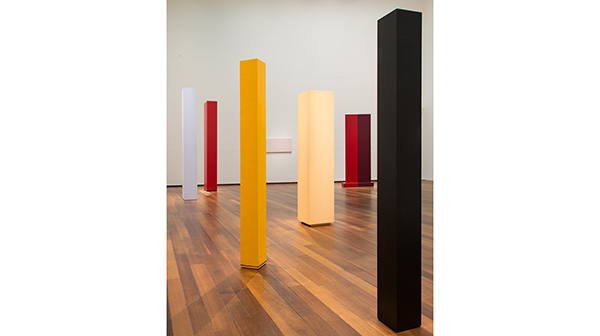 April 10, 2018Miguel de Baca, Terra Foundation Visiting Professor of American Art, University of Oxford, and associate professor, department of art history, Lake Forest College. The studio life of Anne Truitt (1921–2004) is explored in the focus exhibitionIn the Tower: Anne Truitt, on view from November 19, 2017, through April 1, 2018. The first major presentation of Truitt's work at the National Gallery of Art, the exhibition celebrates the museum's acquisition of several major artworks by Truitt in recent years, including seminal works from the collection of the Corcoran Gallery of Art, as well as several outstanding loans. Bringing together nine sculptures, two paintings, and 12 works on paper representing the different media in which the artist worked, the exhibition traces Truitt's artistic development from 1961 to 2002. One of the most original and important sculptors to emerge in the United States during the 1960s, Truitt is unique in the field of minimalist art. She hand-painted her sculptures in multiple layers to create abstract compositions of subtle color in three dimensions. Her art is infused with memory and feeling, unlike much minimalist art, and while most of her peers were based in New York or Los Angeles, she worked alone and independently in Washington, DC. For a public symposium held on January 19, 2018, Miguel de Baca further explores ideas first introduced in his bookMemory Work: Anne Truitt and Sculptureby considering Truitt’s oeuvre in the context of the cultural practice of historic preservation and the idea of the 20th-century “monument.”
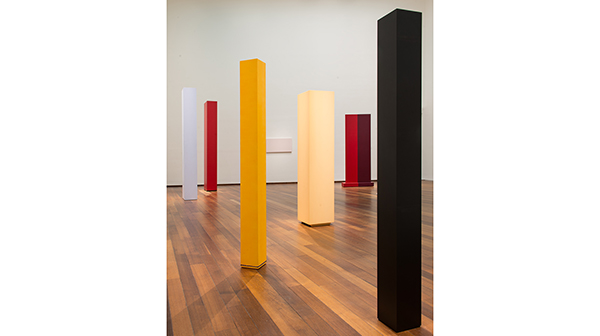 April 10, 2018Anna Lovatt, Marguerite Hoffman Scholar in Residence, Meadows School of the Arts, Southern Methodist University. The studio life of Anne Truitt (1921–2004) is explored in the focus exhibitionIn the Tower: Anne Truitt, on view from November 19, 2017, through April 1, 2018. The first major presentation of Truitt's work at the National Gallery of Art, the exhibition celebrates the museum's acquisition of several major artworks by Truitt in recent years, including seminal works from the collection of the Corcoran Gallery of Art, as well as several outstanding loans. Bringing together nine sculptures, two paintings, and 12 works on paper representing the different media in which the artist worked, the exhibition traces Truitt's artistic development from 1961 to 2002. One of the most original and important sculptors to emerge in the United States during the 1960s, Truitt is unique in the field of minimalist art. She hand-painted her sculptures in multiple layers to create abstract compositions of subtle color in three dimensions. Her art is infused with memory and feeling, unlike much minimalist art, and while most of her peers were based in New York or Los Angeles, she worked alone and independently in Washington, DC. For a public symposium held on January 19, 2018, Anna Lovatt focuses on Truitt's writings, particularly those passages concerned with artistic materials. These passages move between a relatively straightforward, practical documentation of materials and techniques, and a more subjective identification with substances such as wood and water. Referring to Gaston Bachelard'sWater and Dreams: An Essay on the Imagination of Matter,Lovatt argues that Truitt is an artist who “dreams with substances,” and that by considering her approach to materials rather than the formal properties of her sculpture, we can gain some new and surprising insights into her work.